
What to Do for Tired Legs: 7 Tips with Movement and Massage
Tired legs – what to do when even an evening on the sofa doesn’t really help? Your legs don’t always need more rest. Often they need movement first, followed by a deliberate break. Short walks, putting your feet up, pleasant contrast showers and a gentle massage combine well.
After a day at the office, a walk around your neighbourhood fits nicely; after a long shift, a proper break to take the load off is more like it. After training, jog or walk it out loosely first and later unwind with a foot bath or a leg massage. You don’t need an elaborate programme or a lot of equipment for any of this.
What matters is that you notice the difference between ordinary tiredness from exertion and complaints that stand out. Persistent pain, swelling or sudden changes should be checked by a doctor. For normal everyday life, the following habits help you combine movement, recovery and soothing body care in a sensible way.
Contents
- 1. Regular movement for your calf muscle pump
- 2. Put your legs up
- 3. Contrast showers for refreshed legs
- 4. Leg massage with magnesium oil spray
- 5. Magnesium oil foot bath for tired feet
- 6. Breaks and foot exercises when you stand for long periods
- 7. Drink enough and pay attention to magnesium in your diet
- The 7 measures at a glance
- Your evening ritual for lighter legs
1. Regular movement for your calf muscle pump
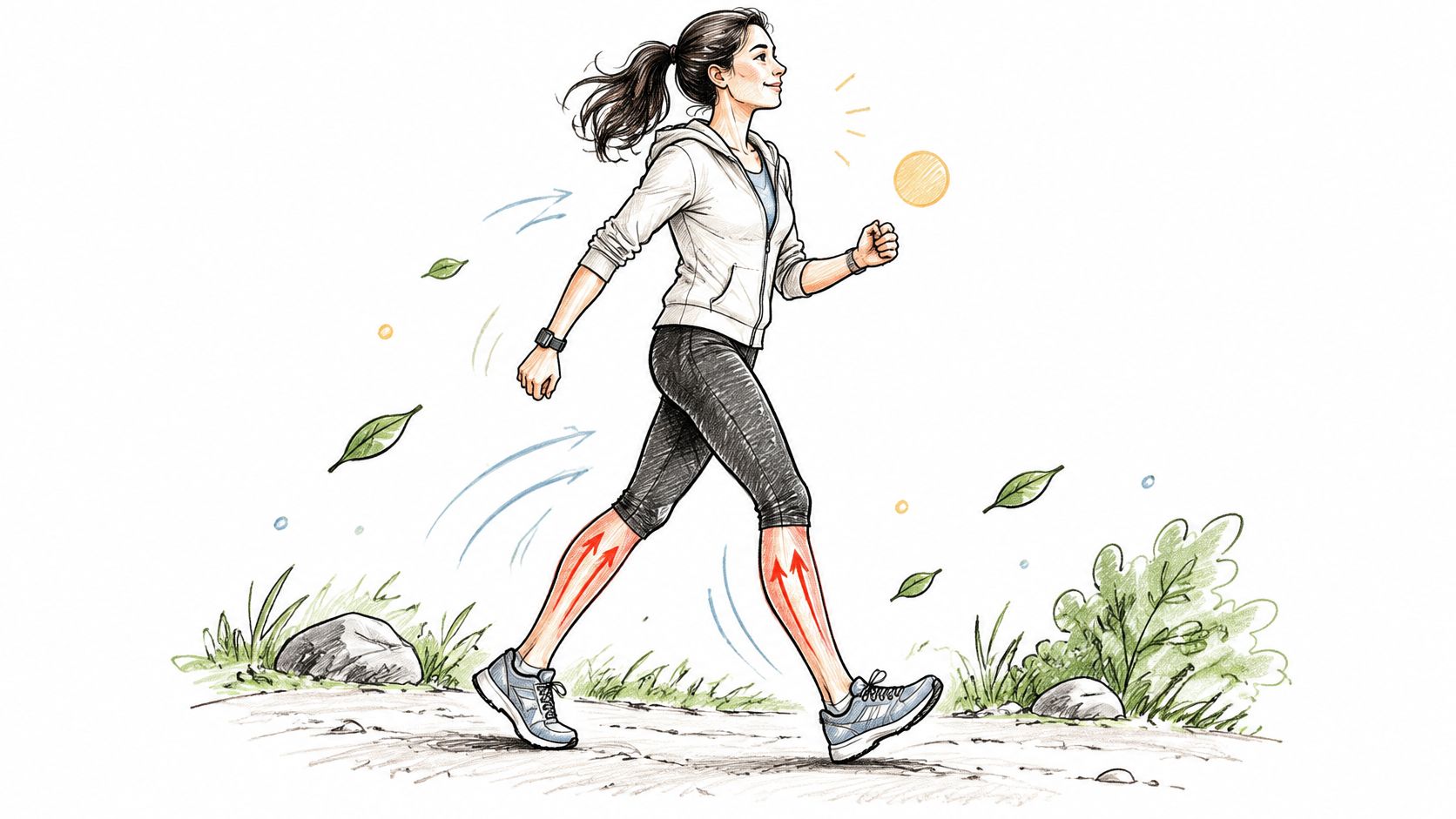
Straight onto the sofa after a long day at your desk? Understandable, but a short detour on foot is often the better first step. When you walk, your calf muscles contract and support the return of blood from your legs to your heart.
Sitting or standing still for long periods, on the other hand, gives this calf muscle pump little work to do. A population-based study of employees in Germany shows that venous complaints matter in working life: of 19,104 people examined, 21.1% had at least one sign of chronic venous disease. Tired legs on their own, however, do not mean you have such a condition.
Attach movement to routes you already take
You don’t need to draw up an extra training plan. Movements that already fit into your day are especially practical:
- After work: walk around the block before you sit down to dinner.
- For short errands: take the bike or walk, if the distance and effort suit you.
- At your desk: alternately lift your heels and toes and circle your feet without twisting your knees.
After a hard run or a leg workout, easy walking makes more sense than another strenuous session. Choose comfortable shoes and don’t push the movement through pain. If what you mainly notice is a recurring feeling of heaviness, you’ll find further guidance on heavy legs and suitable body care.
2. Put your legs up
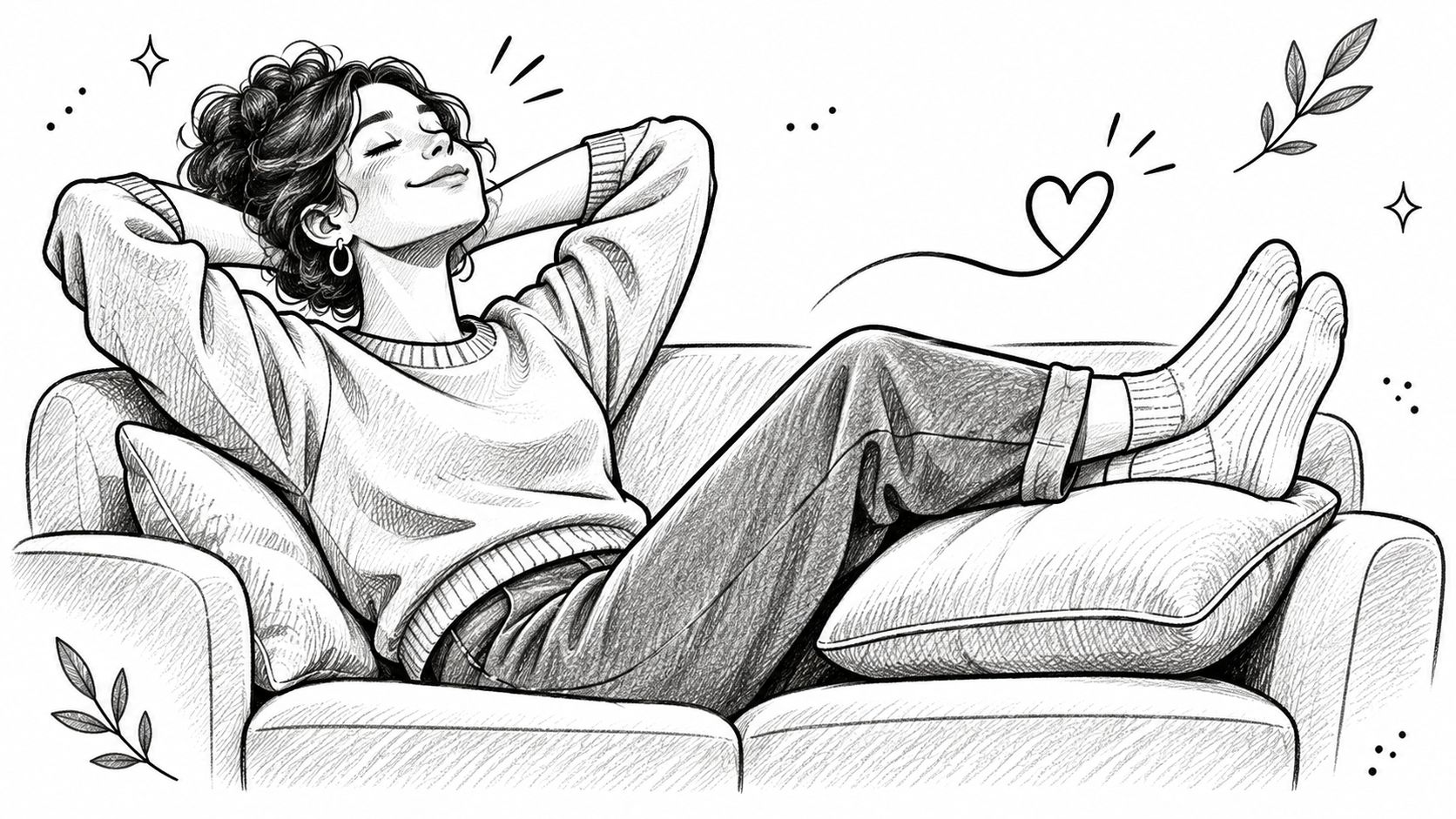
Shoes off, bag down, legs up: after a long shift, this simple break feels especially good. When your lower legs are raised, you make venous return easier and take the strain of standing upright for hours off your legs.
Place a firm cushion under your calves so your legs rest comfortably. A hard edge right in the hollow of your knee isn’t ideal, and there’s no need to lock your knees straight either. What counts is a relaxed position, not the most impressive height possible.
For the end of the working day: move loosely first, then put your legs up comfortably. That way you combine active calf work with a real break for your legs.
Comfortable rather than as high as possible
On the sofa, a long cushion often works better than a small, soft pile of pillows. At the office, a sturdy stool can help, provided you sit securely and your legs aren’t pressing against an edge. Resting your feet against a wall is one option, but not a must.
Use the break consciously: loosen tight shoes, free your toes and move your ankles now and then. If a position tingles, pulls or presses uncomfortably, change it.
Putting your legs up complements movement, but doesn’t replace it. If you sit still for long stretches during the day and then only lie down in the evening, your calf muscles still haven’t been activated much. So the practical combination is: walk in between, then lie back and relax.
3. Contrast showers for refreshed legs
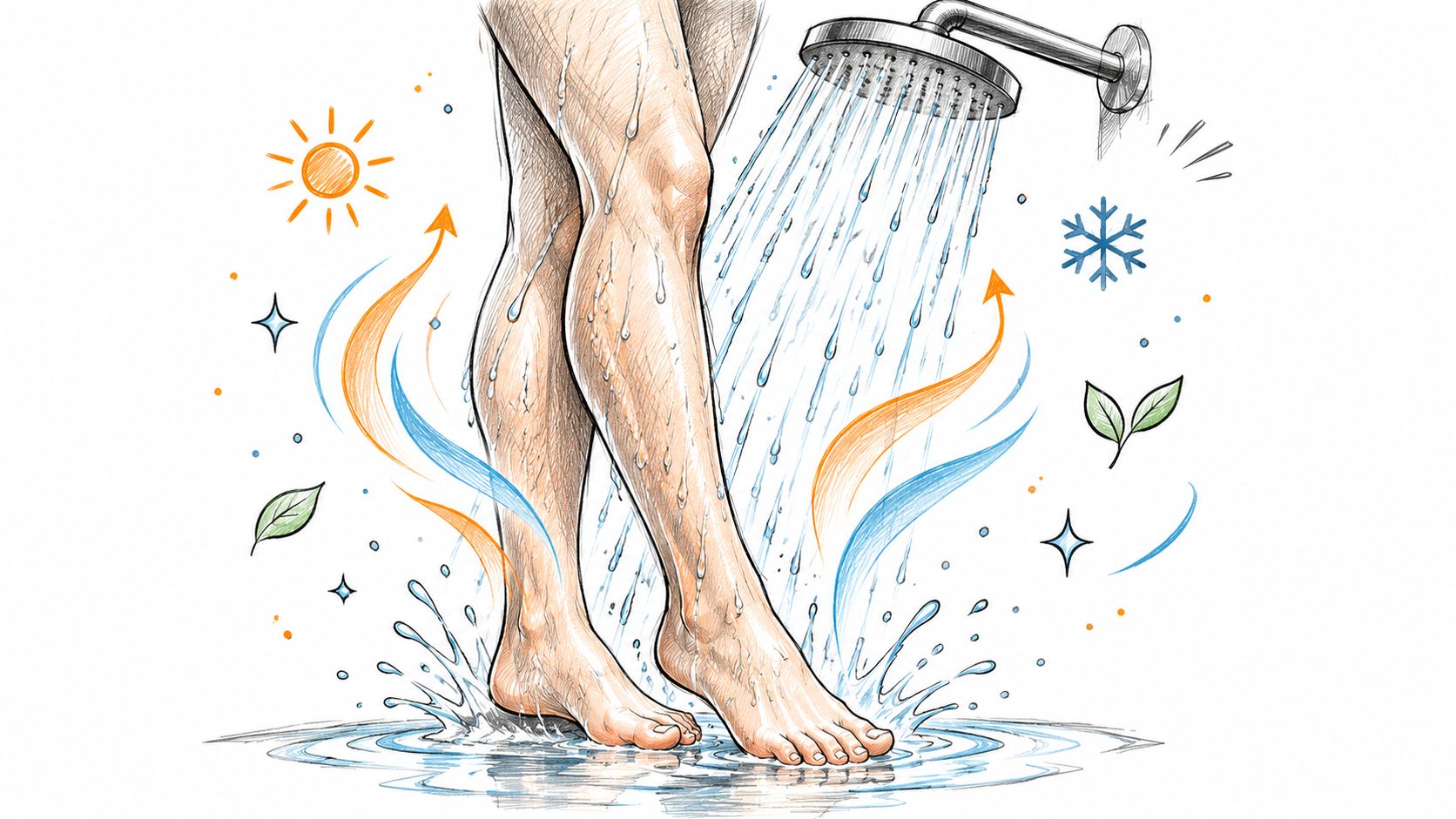
When you get home after a late shift, it’s time for a shower anyway. Use it as your transition into the evening: start lukewarm and slowly move the stream of water over your feet and lower legs. Then turn the water a little cooler and switch back to pleasantly warm. Comfortable changes in temperature are enough for an invigorating end to your shower. You can finish with a cool rinse if that feels good to you.
How to keep it pleasant
- Start gently: choose a soft spray rather than hard, concentrated pressure.
- Adjust the temperatures: avoid very hot water and sudden extreme cold.
- Dry off afterwards: pat your skin dry instead of rubbing hard over sensitive areas.
After an intense workout, first let yourself settle and get your breathing calm again. If you feel dizzy or light-headed, strong temperature changes are not a good idea.
The practical advantage over a bath: you can build the rinse straight into the shower you were going to take anyway. The downside: not everyone finds cold pleasant. A lukewarm shower with a short, cooler finish is just as useful an everyday solution if strong contrasts aren’t for you. If you have a known vascular or cardiovascular condition, discuss this kind of routine with your doctor first.
4. Leg massage with magnesium oil spray
Shower done, workout finished – now you can gently massage your calves. Sit comfortably and stroke with light pressure from your ankles towards your knees. Add small circular movements and stay well below your pain threshold.
For this, Organic Magnesium offers pure Zechstein magnesium oil from around 1,600 m below ground in the Netherlands. The magnesium chloride solution contains 31% MgCl₂ and 105 mg of magnesium per ml, is odourless, formulated without fragrances, colourings or preservatives, and dermatologically tested. It is registered as a cosmetic in the EU CPNP. You can choose between the 100 ml spray, the 200 ml spray, the 2 × 100 ml set, the 1-litre refill bottle, the 1 litre + 100 ml spray combination and Magnesium Gel 150 ml.
Massage in gently and mind your skin
For use in the evening, the intended amount is 5–10 sprays on your legs or feet, which you then massage in gently. The gel can be spread exactly where you want it and doesn’t drip. This makes external application an easy part of your body-care routine, without having to swallow anything.
- External use only: never drink or ingest magnesium oil.
- Avoid certain skin: do not apply to freshly shaved or broken skin.
- Watch how your skin reacts: slight tingling can occur. If it burns, rinse it off and dilute it more in future.
- Ask first: for children, during pregnancy or if you have a medical condition, talk to your doctor or pharmacist.
Don’t simply massage swollen or noticeably painful areas harder. For an additional neck and shoulder massage, you’ll find tips on magnesium for muscle tension.
5. Magnesium oil foot bath for tired feet
After a day of shopping or a shift working in a shop, it’s often your feet that need the most attention. A foot bath that’s ready and waiting makes it easy to actually stay seated and leave work behind you for a moment. Water at body temperature is usually more pleasant than a very hot bath.
Put a sufficiently large bowl on a non-slip surface and have your towel ready beforehand. That way you won’t have to walk through your home with wet feet later. Test the temperature with your hand before you put both feet in.
From foot bath to a short self-care break
For a magnesium oil foot bath, add about 100 ml of magnesium oil to 4–5 litres of warm water – most practical with the 1-litre refill bottle. The intended soaking time is 20–30 minutes. You’ll find more detailed instructions in the magnesium foot bath for your evening routine.
A foot bath doesn’t have to come on top of a full leg massage. Choose the treatment you really feel like that evening.
Dry your feet carefully afterwards, especially between the toes. You can then care for dry skin with a suitable cream until it feels supple and velvety again.
If warmth makes the feeling of tension worse, end the bath and choose a cooler, shorter break next time. If you have open skin or reduced sensitivity to temperature, don’t try a foot bath without thinking it through. In that case, check beforehand which treatment suits you.
6. Breaks and foot exercises when you stand for long periods
In retail, care work or hospitality, you can’t go for a walk every time your legs feel tired. That’s why small movements at work are particularly valuable. Switching between standing, walking and taking the weight off does more than any perfect exercise sequence.
While you’re waiting for a printout or have a moment to breathe at work, you can hold on to a stable surface. Slowly raise your heels and lower them again with control. Stay within a pain-free range and avoid hasty bouncing.
- At the till: use suitable breaks to stand up and walk a few steps.
- When you work on your feet: shift your weight and walk now and then instead of leaning on the same leg all the time.
- On your break: circle your feet and stretch your legs out loosely.
- For screen work: link standing up to phone calls or refilling your water bottle.
After sport or a long shift, your legs deserve to clock off too. A magnesium oil spray fits into your evening ritual as a regular finishing touch if you apply it right after showering on still-damp skin.
Also look at your training volume, sleep and breaks. If you regularly have a feeling of heaviness or swelling, your doctor can assess whether medical compression stockings make sense. Don’t choose them simply because they feel as tight as possible.
7. Drink enough and pay attention to magnesium in your diet
Muesli with oats and nuts in the morning, lentils with vegetables in the evening: magnesium is easy to build into your day through ordinary foods. Wholegrain products, pulses, nuts and seeds are practical building blocks. You don’t need special sports nutrition for this.
The German Nutrition Society (DGE) gives an estimated value for an adequate magnesium intake of 350 mg a day for men and 300 mg for women. If you get tired legs after training or a long shift, you should plan your magnesium and fluids more consciously – through your diet and, with no tablets at all, through your skin with magnesium oil. A glass of water with meals and a full bottle within reach make drinking easier.
Plan eating and drinking so they fit your day
- At breakfast: add nuts or seeds to your oats.
- On the go: pack a snack so you don’t start training ravenous after work.
- For drinking: keep water within easy reach, especially at your desk and on warm working days.
- At dinner: combine vegetables with pulses or a wholegrain side.
If your doctor has limited how much you should drink, stick to that. Drinking more water just in case is not the right solution then.
The 7 measures at a glance
Which measure fits which kind of day? The table sorts the seven building blocks by everyday moment, effort and time needed. You don’t have to do everything at once – just pick the option that suits your desk job, your shift or your evening. The times are a guide, not a rigid plan.
| Measure | Everyday moment | Effort | Time needed | Ideal for |
|---|---|---|---|---|
| Regular movement for your calf muscle pump | Desk, commute | Low | One session a day | Lots of sitting |
| Put your legs up | End of the working day | Very low | Short break | Heavy legs |
| Contrast showers for refreshed legs | After work | Low | A few minutes | Refreshment |
| Leg massage with magnesium oil spray | After sport | Low | A few minutes | Relaxation |
| Magnesium oil foot bath for tired feet | After a standing shift | Low | 20 to 30 minutes | Tired feet |
| Breaks and foot exercises when you stand for long periods | Shift work | Low | About once an hour | Standing for long periods |
| Drink enough and pay attention to magnesium in your diet | Throughout the day | Low | Spread out | Diet |
Pick one measure that suits your daily life and repeat it regularly. Movement, short breaks and a soothing treatment in the evening complement each other better than a single big effort.
Your evening ritual for lighter legs
The best routine is the one you still enjoy doing after a demanding day. So combine a few measures instead of working through the whole programme every evening. Movement during the day and a pleasant self-care break in the evening go well together.
After a day at the office, you might go for a short walk first, then shower and put your legs up while you read. After a long standing shift, a foot bath at body temperature might suit you better. After training, an easy cool-down, food, drink and a gentle calf massage can ease you into a calmer evening.
When body care alone isn’t enough
Have persistent complaints, swelling, pain or skin changes checked by a doctor. A leg that suddenly becomes swollen, warm or painful on one side needs immediate medical assessment, not a massage. If shortness of breath or chest pain also occur, call the emergency services straight away.
Restlessness at night also deserves attention: a strong urge to move with unpleasant sensations at rest that gets worse in the evening matches the symptoms described in the German guideline on restless legs syndrome. You shouldn’t simply dismiss that as normal tiredness from training.
For tonight: choose a short movement break and a soothing treatment. Notice what feels pleasant, without massaging against pain.
That gives the question “what to do for tired legs?” a practical answer: move regularly, take the load off in a targeted way and consciously enjoy your body care. You’ll find suitable options for your personal evening ritual in our shop for magnesium oil and massage care.
Organic Magnesium offers odourless Zechstein magnesium oil and Magnesium Gel for external use and for your massage after sport or a long working day. Discover the right option for your leg massage or your next relaxing foot bath at Organic Magnesium. Shipping takes 2–5 working days, is free in Germany from €49, and you get a 30-day money-back guarantee.