
Cream for Neck and Shoulder Pain: The Massage Gel
When it comes to a cream for neck and shoulder pain to massage in, many people reach for Magnesium Gel 150 ml: magnesium straight through the skin, combined with warmth and movement. The magnesium oil spray is the alternative for larger areas.
You’re still sitting at your screen, your shoulders crept up towards your ears long ago, and when you turn round, your neck twinges. No wonder you’re looking for something to apply. With massage care with magnesium, you loosen tense shoulders with no tablets at all. Here’s how to go about it.
Contents
- Cream for neck and shoulder pain: care options compared
- Why your neck and shoulders ache so often
- Massaging Magnesium Gel into your neck and shoulders
- Spray after the shower as part of your evening routine
- Warmth, breaks and posture at your desk
- Safe skincare and medical advice
- Gel or spray for your next neck care session
Cream for neck and shoulder pain: care options compared
For targeted massage, a magnesium gel is practical: it stays where you want it, doesn’t drip and can be spread in a controlled way. A liquid magnesium oil spray is a better fit if you also want to care for your upper back or calves after a shower.
External care for shoulders and neck
| Care | Suits you if | How to use it | Feel on the skin |
|---|---|---|---|
| Magnesium Gel 150 ml | you massage your neck and shoulders in a targeted way | gently massage in a small amount, rinse off any residue if needed | stays in place, doesn’t drip, less oily and milder |
| Magnesium oil spray 100 or 200 ml | you care for larger areas after a shower | apply sparingly to clean, slightly damp skin and spread | slightly oily, easy to spread over large areas |
| Pleasant warmth | your neck aches after sitting or training | use a warm shower, a warm cloth or a covered hot-water bottle | cosy, no care product needed |
| Short movement breaks | you sit or stand for long periods | circle your shoulders, gently tuck your chin, lower your shoulder blades | no cream, just a change of position |
Telling massage care and medicated creams apart
A classic cream for neck and shoulder pain from the pharmacy usually contains active drug ingredients such as diclofenac or ibuprofen. Magnesium Gel is the alternative without such active ingredients: Zechstein magnesium chloride to massage in, ideal for daily neck and shoulder care. However, don’t stop taking medication your doctor has prescribed on your own because of it.
With the gel, the focus is on touch, gentle massage and body care. Warmth can be added with a warm shower, for example – together with the gel, a soothing evening ritual for tense shoulders.
For the full spray routine, there’s the guide to using magnesium oil. How to use magnesium oil for tension and pain is explained in magnesium oil for pain. Have severe, persistent or radiating complaints checked by a doctor.
Why your neck and shoulders ache so often
In the Robert Koch Institute’s BURDEN 2020 survey, 5,009 adults were interviewed by phone between October 2019 and March 2020: 45.7% reported neck pain in the previous twelve months. Women were affected more often, at 54.9%, than men, at 36.2%. In addition, 15.6% reported pain in the lower and upper back as well as in the neck; the RKI’s analysis of the 1998 German National Health Interview and Examination Survey had found 44.8% for neck pain within the preceding twelve months.

Everyday life between screen and training
Maybe your day starts at the computer, then you get on your bike, and in the evening you spend a bit more time on your phone. Sometimes you only notice how tensely you’ve been holding your shoulders when you take your jacket off.
Your neck can be compared to a strap that carries your head through the day. If you keep hunching your shoulders, that strap starts to feel tight at some point. The image makes it clear why changing position can feel better than keeping still for even longer.
A heavy bag on the same shoulder or an unfamiliar training load are good reasons to take a closer look at your habits. Don’t just ask yourself what you can apply, but also: When am I holding on unnecessarily tight?
Massage, warmth and movement belong together. The gel is the hands-on part.
The idea behind this kind of care is simple: interrupt your daily routine, use pleasant warmth and touch tense areas gently. If you don’t like swallowing tablets, external massage care is a pleasant alternative in your body-care routine – nothing to swallow and no strain on your stomach from taking something by mouth.
You’ll find more ideas for combining massage with everyday life under magnesium for muscle tension.
Massaging Magnesium Gel into your neck and shoulders
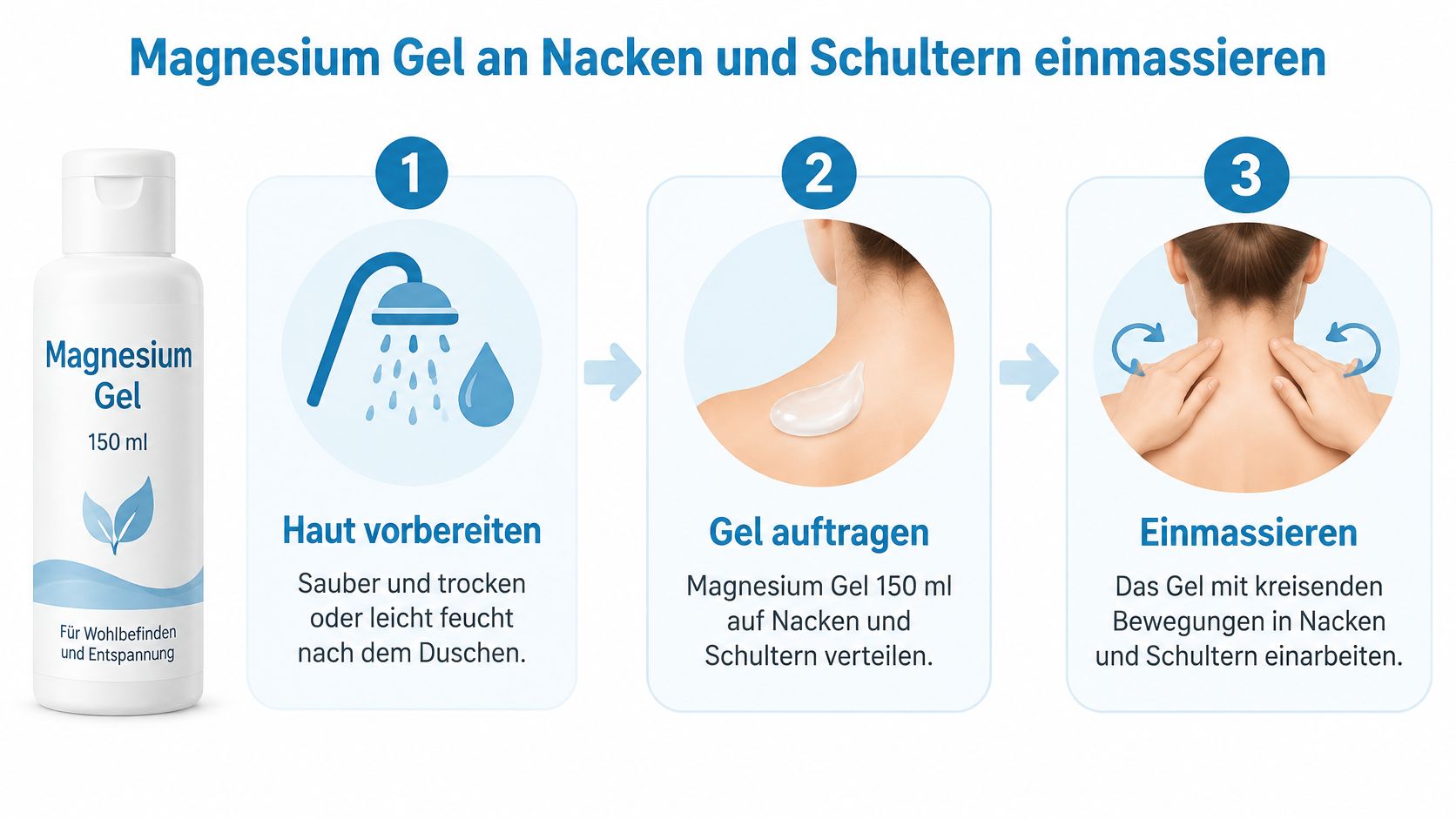
For an evening massage, Magnesium Gel 150 ml is a good fit. It’s easier to spread and massage in, doesn’t drip and feels less oily than the liquid spray. For sensitive skin, it’s the milder option.
Set up a spot where you can rest your forearms now and then. A chair in front of the washbasin is often more practical than a twisted position on the sofa.
How to keep the strokes comfortable
- Prepare your skin. It should be clean and dry, or still slightly damp after a shower. Leave out freshly shaved or broken areas.
- Take a little gel. Spread a small amount in your palm so that your fingertips or the balls of your thumbs are coated. Adding more is easier than spreading excess gel around.
- Get comfortable. Let your shoulders drop deliberately and tilt your chin only slightly towards your chest. You don’t need a strong stretch.
- Stroke over a wide area. Run your fingertips along the side of the back of your neck outwards towards your shoulder. Small circles on the soft muscle area between neck and shoulder complement the stroking movement.
- Limit the pressure. You should be able to keep breathing calmly. Don’t press on your cervical vertebrae or on bones, and don’t massage the front of your neck.
- Check how your skin feels. Leave the product on your skin at first, as long as it stays comfortable. You can rinse off sticky residue with water.
- Choose your aftercare. If you like, apply an unscented body care product afterwards. What matters is that your skin feels comfortable and velvety to you.
Less pressure is the better choice
Don’t try to force a sensitive spot away. If you find yourself holding your breath, clenching your jaw or hunching your other shoulder, reduce the pressure or stop the massage.
Massage rule: your hands should work pleasantly, not fight against the pain.
After sitting for a long time or after sport, this is a nice opportunity to consciously slow down. Put your phone out of reach and don’t let the massage become just another task on the side. A short, pleasant routine fits better into everyday life than an elaborate programme you keep putting off.
Spray after the shower as part of your evening routine
The 200 ml magnesium oil spray is the obvious choice if you want to care for your shoulders, neck and calves in one go. The name magnesium oil describes the slightly oily feel. It’s actually a magnesium chloride solution, not a cooking oil.
Organic Magnesium’s pure Zechstein magnesium oil comes from around 1,600 metres below ground in the Netherlands. It contains 31% magnesium chloride and 105 mg of magnesium per millilitre, has no fragrances, colourings or preservatives, is dermatologically tested and registered as a cosmetic in the EU CPNP.
A simple bathroom sequence
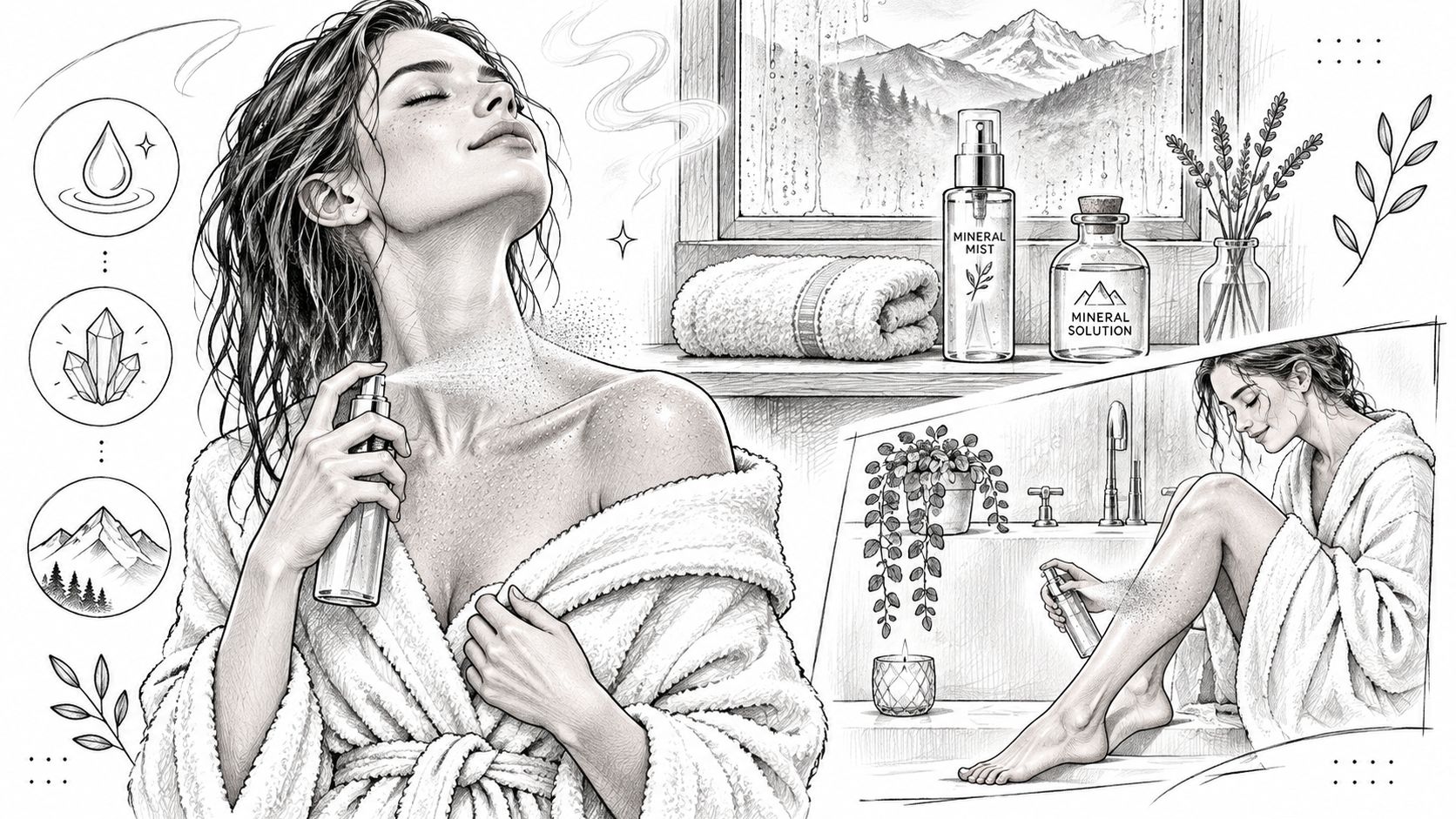
- After the shower: pat your skin so that it stays slightly damp.
- Apply sparingly: spray a little onto the area you want or into your hand first. Don’t spray towards your face.
- Work in gently: stroke over your shoulders and calves without kneading hard.
- Wash off if needed: if residue bothers you, rinse it off and pat your skin dry.
If your skin reacts sensitively, you can dilute the oil with a little water. For hard-to-reach spots on your upper back, going via your hand is often more comfortable than a contorted attempt to spray.
Daily magnesium needs and the spray
The German Nutrition Society (DGE) gives estimated values for an adequate daily intake of 350 mg of magnesium for men aged 19 and over, 300 mg for adult women and also 300 mg for pregnant and breastfeeding women. With 105 mg of magnesium per millilitre, a single spray (approx. 0.1–0.2 ml) already puts around 10–20 mg of magnesium on your skin – a simple addition to your diet, with no tablets at all.
Especially if you train a lot, sweat heavily or are stressed, magnesium oil fits well into your routine. Start with a few sprays and increase according to how your skin feels.
For a calmer start to the night, the sequence can stay simple: shower, apply your care, dim the lights, let your shoulders drop. For more ideas, see magnesium for relaxation; the origin and the ingredient are explained in our articles on Zechstein magnesium oil and magnesium chloride.
Warmth, breaks and posture at your desk
Keep moving in everyday life instead of permanently holding your neck stiff to protect it. The DEGAM S3 guideline on non-specific neck pain rates physical activity and exercise therapy positively, recommends self-applied heat as an option and combines passive treatments with activating measures.
For you, this means: a warm shower or a warm cloth can make the transition from your working day to your evening care routine more pleasant. Warmth should feel cosy, not hot. Place a hot-water bottle on your skin with a protective layer of fabric, not directly on bare skin.
Movements for your next break
- Circle your shoulders: move them slowly without forcing large or jerky circles.
- Tuck your chin: draw your chin back slightly, as if making a small double chin. Your head doesn’t tip back as you do this.
- Open your chest: open your arms to the sides and gently draw your shoulder blades down towards your back pockets, without arching your lower back.
Position your screen so that its top edge is roughly at eye level. Put your feet on the floor and pull the keyboard closer so you’re not working with your arms stretched out. Even so, change position regularly instead of clinging to a supposedly perfect posture.
After running, cycling or strength training, dry yourself off first and put on something dry if needed. Take the opportunity to care for tired legs and feet too, without turning it into a second big programme. You’ll find suitable ideas on heavy legs and the magnesium foot bath.
For your next working day: have a pleasant source of warmth ready, stand up regularly and deliberately leave time for body care in the evening.
Safe skincare and medical advice
With clear skin rules, using these products stays straightforward. How your skin feels decides whether you leave a product on or rinse it off.
- External use only: never drink or ingest magnesium oil or magnesium gel.
- Choose intact skin: do not apply to freshly shaved, irritated or broken skin. Avoid the eyes and mucous membranes.
- Watch for tingling: slight tingling is normal the first few times you use it. Damp skin or diluting with water can make it more comfortable.
- Rinse off if it burns: remove the product with water and next time use it more sparingly and more diluted. If irritation persists, take a break.
- Ask if in doubt: for children, during pregnancy and breastfeeding, with kidney disease or other medical conditions, check with a doctor if in doubt.
You’ll find more information under magnesium and side effects on the skin.
Magnesium through the skin instead of tablets
The German Federal Institute for Risk Assessment (BfR) recommends a maximum of 250 mg per daily dose of magnesium from a single food supplement for people aged four and over, split into at least two portions. The reason is possible diarrhoea with higher additional amounts taken by mouth.
This limit applies to supplements you swallow. With magnesium oil and Magnesium Gel, you give your body magnesium through the skin – with no tablets and without putting a strain on your digestive tract.
When to stop massaging yourself
If you have severe, persistent pain or pain radiating into your arm or head, have the cause checked by a doctor. This applies especially if you have numbness, loss of strength, fever or complaints after an accident. Sudden paralysis or fever with a markedly stiff neck needs medical help immediately.
With warning signs like these, an examination comes before the next massage.
Gel or spray for your next neck care session
For targeted massage, use the gel. It stays on your neck and shoulders, doesn’t drip and can be worked in with control. Its less oily, milder feel on the skin makes it particularly pleasant if you want to spread the product consciously with your hands.
For larger areas after a shower, the spray is the right choice. The 100 ml spray is handy for getting to know the product, while the 1-litre refill bottle is worthwhile for a regular evening routine. What matters is not applying as much as possible, but finding a routine that fits well into your day.
Your decision in brief
- Targeted and with your hands: gel for massaging your shoulders and neck.
- Large areas and fuss-free: spray for body care after a shower.
- If there are warning signs: see a doctor rather than massaging harder.
In our product range for your neck care, you’ll also find the 2 × 100 ml set, the 1-litre refill bottle and 1 litre plus 100 ml spray. Shipping takes 2–5 working days to all 27 EU countries and the UK, is free within Germany from €49, and comes with a 30-day money-back guarantee.
Organic Magnesium offers you Magnesium Gel 150 ml for targeted shoulder and neck massage and magnesium oil sprays for caring for larger areas of skin. Visit Organic Magnesium and choose the option for your evening: slightly damp skin, gentle hands on your shoulders and then lights out.