
Magnesium Bath: How to Use It, Dosage & Effects

For a foot bath, add about 100 ml of magnesium oil to 4 to 5 litres of warm water and soak your feet for 20 to 30 minutes. A magnesium bath is a bath with added magnesium, either as a foot bath or a full bath, and there are also sprays and gels for targeted massage of individual areas of the body.
Do you even need to fill the tub? Many people treat a magnesium bath, foot bath, shower and magnesium oil as the same thing, although each form suits a different situation. After sport, a short ritual on the calves often works well; after a long day on your feet, warm water for the feet is the better choice. If you sort out the form, amount and contact time beforehand, a vague plan turns into a simple care routine.
Contents
- Magnesium bath, foot bath and spray in everyday life
- Foot bath and massage step by step
- Judging skin tolerance during use
- Magnesium through the skin: the alternative to tablets
- Your first week with magnesium oil
- Short answers to finish
Magnesium bath, foot bath and spray in everyday life
Magnesium oil is not a real oil. It is a concentrated solution of magnesium chloride and water that feels slightly oily on the skin. That is why terms like liquid magnesium to rub in, magnesium body spray and magnesium spray or oil all turn up for the same liquid. “Spray” describes the bottle, “oil” the contents.
Organic Magnesium’s Zechstein magnesium oil contains 31 per cent magnesium chloride, which is 105 mg of magnesium per millilitre, and is a saturated, undiluted brine with no fillers, fragrances or preservatives. Options include the 100 ml spray, the 200 ml spray, the 1-litre refill bottle and the Magnesium Gel 150 ml. The small bottle fits in your gym bag, while the large one stays at home for refilling.
Ways to use it at a glance
| Form | Use | Amount | Contact time |
|---|---|---|---|
| Magnesium oil as a spray | Calves, thighs, arms or neck | 5 to 10 sprays | about 20 minutes, then rinse off if needed |
| Magnesium Gel 150 ml | targeted massage of individual areas | apply thinly, amount as stated on the pack | massage in and leave on for about 20 minutes |
| Foot bath with magnesium oil | Feet and lower legs | about 100 ml to 4 to 5 litres of warm water | 20 to 30 minutes |
| Magnesium bath salts or flakes | Full bath | amount as stated on the pack, start low | bathe for as long as it feels pleasant |
After running, cycling or strength training, spray 5 to 10 sprays onto your calves and thighs after showering, massage in gently and rinse off any residue after about 20 minutes if needed. After a long day standing, a foot bath is the better choice; afterwards, take your time massaging the soles of your feet and your calves. For the neck and shoulders after sitting for a long time, the gel is ideal because it doesn’t run and can be spread exactly where you want it.
Simple rule for choosing: water for feet and lower legs, spray for large areas, gel for a single spot.
Many users apply magnesium oil once a day, for example in the evening after a shower on their legs or feet, as skincare for a pleasant feel on the skin. That also answers how often to use magnesium oil when you start. For using magnesium flakes in a full bath and for magnesium bath salts, this overview gives no fixed number of grams, so start low according to the pack instructions. If you want to know more about flakes as a bath additive, you’ll find further information on magnesium flakes for foot baths and full baths. For children, check the use with a doctor or pharmacist beforehand.
Foot bath and massage step by step
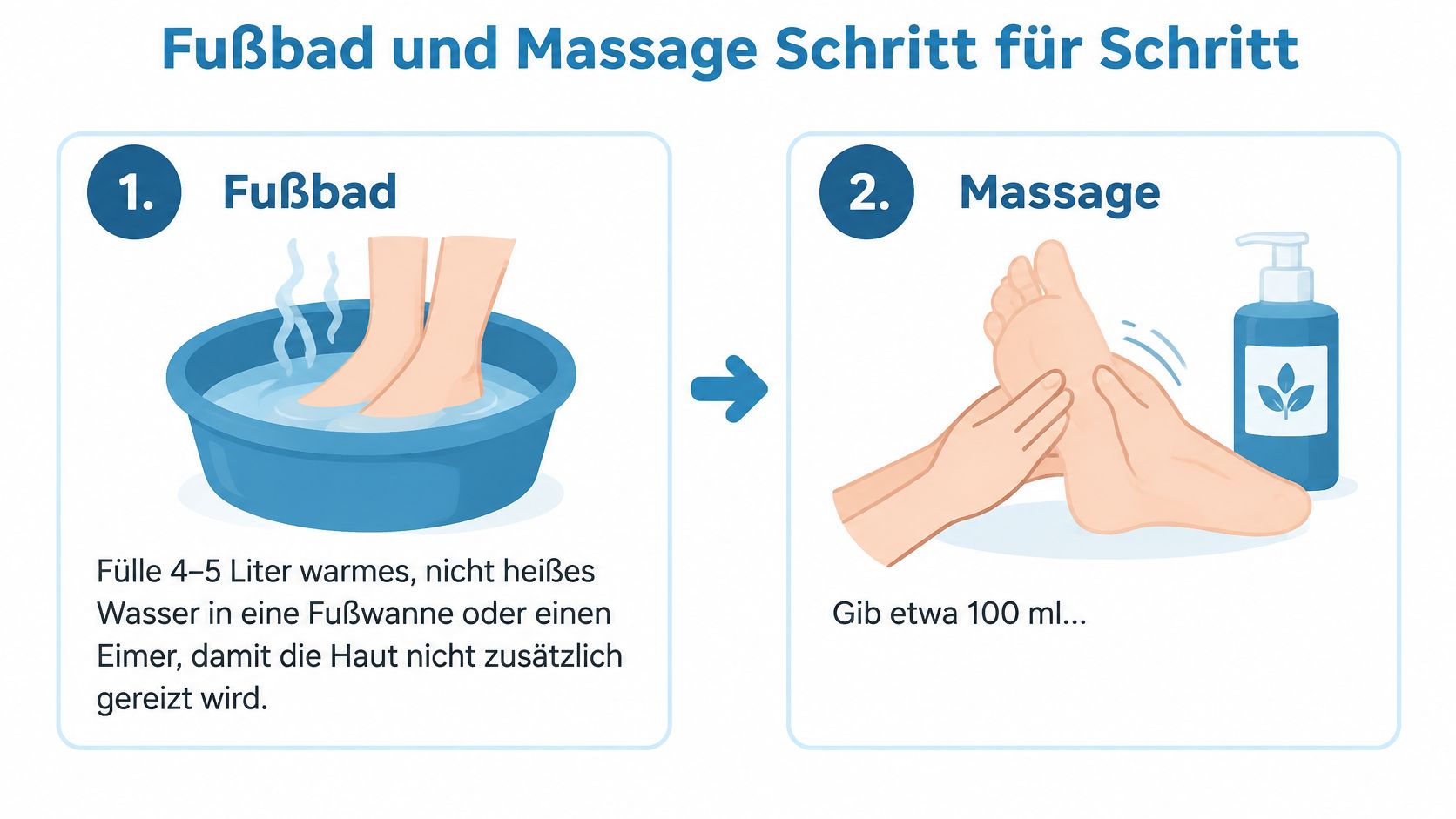
How does the oil get from the bottle onto your skin? Two methods have proven themselves: the warm foot bath for feet and lower legs, and the spray for targeted massage on a single spot. In the bath, the solution spreads evenly through the water; the spray bottle doses precisely where you want to massage.
Preparing the foot bath
- Add warm water: Pour 4 to 5 litres of warm, not hot, water into a foot bath or bucket. Lukewarm is perfectly fine; water that is too hot irritates the skin unnecessarily.
- Stir in the oil: Add about 100 ml of magnesium oil and give it a quick stir. This way the concentrated brine spreads evenly through the water and doesn’t collect in one spot.
- Soak your feet: Place your feet in the water for 20 to 30 minutes and lean back. If your skin feels too warm, take a short break.
- Dry and massage: Dry your feet and massage the soles and calves with calm, even pressure. This magnesium oil massage on your feet with magnesium oil rounds off the bath.
Using the spray
- Spray onto damp skin: Spray onto clean, slightly damp skin, for example straight after a shower. That is where the oil spreads most evenly – the key to how to use magnesium spray.
- Measure the amount: Apply 5 to 10 sprays exactly on the spot you want to massage. The spray bottle hits the right spot directly, with no tablets at all. A smaller amount is easier to work in than one that just sits there as a damp film.
- Massage in and leave on: Gently massage the oil in and leave it on your skin for about 20 minutes. Afterwards, simply rinse off any residue with water if needed.
- Repeat if needed: You can repeat spraying and massaging if you want to care for other areas. The aim is a pleasant feel on the skin without any tightness.
For a magnesium salt bath with bath salts or flakes in a full bath, follow the pack instructions, use warm water and get out as soon as your skin starts to burn.
Judging skin tolerance during use
Slight tingling is common with concentrated magnesium oil and is usually no reason to stop straight away. If it becomes unpleasant, dilute the oil with water or a body lotion. If your skin burns or turns very red, rinse it off with water immediately and use less or a more diluted solution next time.
Before using it on a large area for the first time, test a small patch on your forearm and wait to see how your skin feels. Magnesium oil should not get onto injured or irritated skin, mucous membranes or into your eyes, and should be stored somewhere cool and dry, out of the reach of children. You’ll find detailed information in the guide to possible skin reactions to magnesium oil.
Understanding skin reactions and responding correctly
| Situation | What you do | Background |
|---|---|---|
| Slight tingling | Dilute with water or body lotion if needed | The oil is concentrated and can tingle on the skin |
| Burning or strong redness | Rinse off with water immediately, use a more diluted solution next time | The skin is reacting to the concentration |
| Freshly shaved or injured skin | Do not use until the skin has completely healed | The skin is more sensitive |
| Eyes or mucous membranes | Do not use; if contact occurs, rinse thoroughly with water | Magnesium oil is not intended for mucous membranes |
| Children, pregnancy, kidney disease or other illnesses | Ask a doctor or pharmacist first | Tolerance can vary from person to person |
For children, during pregnancy and if you have any illness, ask a doctor or pharmacist first, because tolerance is individual. That is why the topic of magnesium spray for children doesn’t belong in a general dosage recommendation.
Magnesium through the skin: the alternative to tablets
A magnesium bath brings magnesium exactly where you feel it: directly onto the skin of your feet, calves and legs. Instead of swallowing tablets, you treat yourself to a warm ritual that relaxes you and fits easily into any evening. Especially after sport, after a long day on your feet or with heavy legs, many people appreciate the feeling of warmth and looseness afterwards.
A foot bath with 100 ml of magnesium oil contains around 10,500 mg of magnesium (100 ml × 105 mg/ml). With the spray you can dose specifically for individual muscle groups, and with the gel you can massage your neck and shoulders. That way you’ll find the right form for every situation.
Benefits at a glance
| Form | Ideal for | Your benefit |
|---|---|---|
| Foot bath with magnesium oil | Feet and lower legs after long periods of standing or walking | warm relaxation ritual, around 10,500 mg of magnesium in the water |
| Magnesium oil as a spray | Calves, thighs and arms after sport | quick, precise, fits in any gym bag |
| Magnesium Gel | Neck and shoulders after sitting for a long time | doesn’t run, ideal for targeted massage |
| Full bath with magnesium flakes | the whole body | relaxation from head to toe |
Magnesium through the skin is especially practical if you don’t want to swallow tablets or powders. You take 20 minutes for yourself and give your body magnesium along the way.
Magnesium oil is your magnesium to massage in: warm, relaxing and with no tablets at all.
If you’re wondering what magnesium oil is good for: for relaxation after sport, for tired, heavy legs, as a calm evening ritual and as magnesium through the skin without tablets. You can read more in the article on the effects of magnesium spray, and how to give tired legs targeted relief is covered in heavy legs and magnesium.
Your first week with magnesium oil
A gentle start on your legs quickly shows you whether the amount and the feel on your skin suit you.
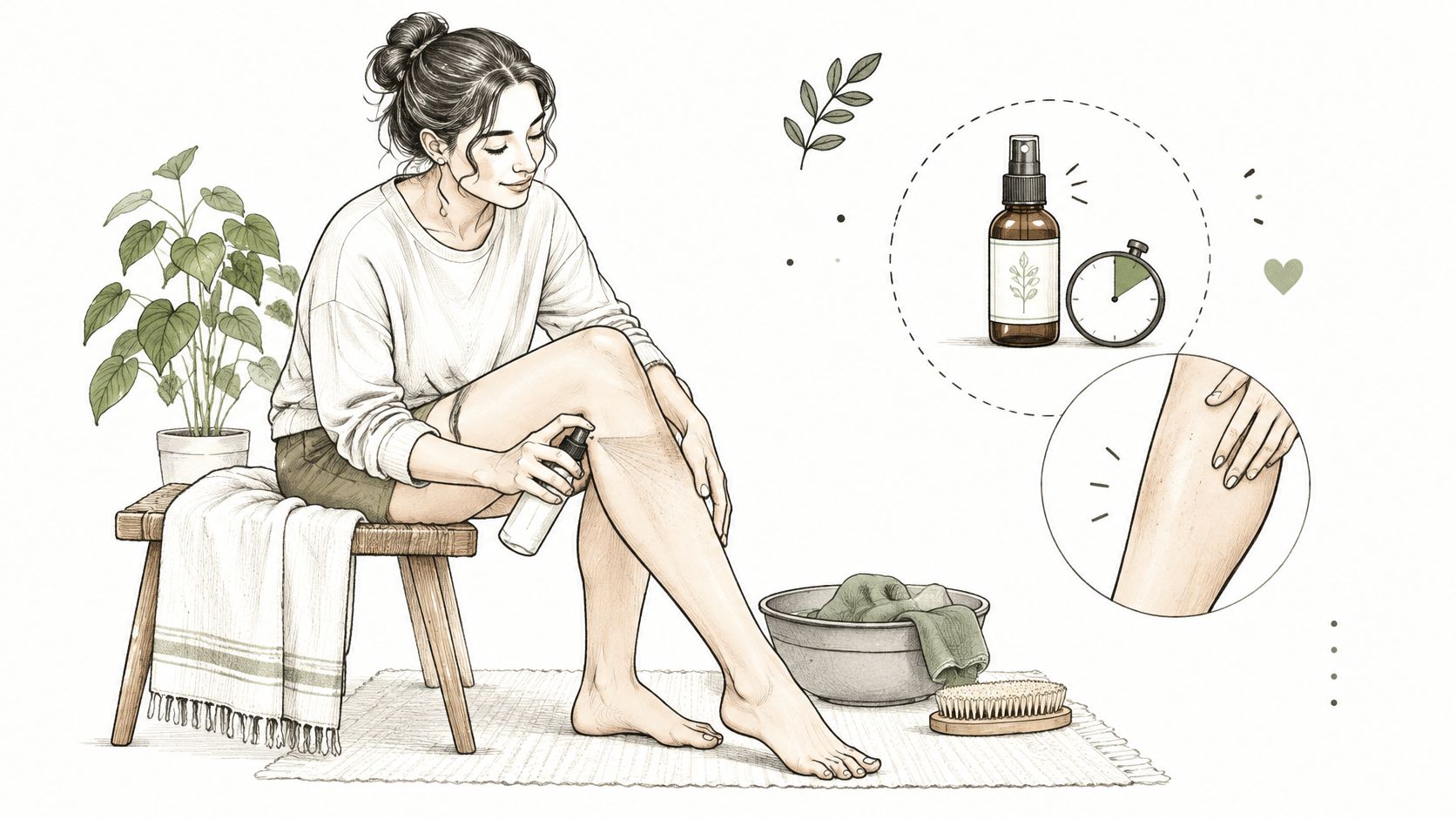
On days 1 and 2, spray only a small area, for example your calves, and watch how your skin responds. Don’t increase the amount just because the routine feels pleasant. Consistency beats ambition.
On three further evenings, use the routine after showering on clean, slightly damp skin. Take the amount from the table, massage in gently, leave on for about 20 minutes and rinse off any residue if needed. After a long day on your feet, replace one of these evenings with the foot bath using about 100 ml in 4 to 5 litres of warm water.
Notes help you judge
- Record how your skin feels: Briefly note any tingling, warmth or tightness and how long it lasts.
- Record the duration: Write down whether or not you rinsed off after 20 minutes.
- Take reactions seriously: Burning or persistent redness means rinse off, take a break and ask a doctor if needed.
Once the routine fits into your evening, the 1-litre refill bottle is enough for regular foot baths later on; to try it out, the 100 ml spray is all you need. You can get both together in the 1 litre + 100 ml spray set. Shipping takes 2–5 working days and is free in Germany on orders from €49, plus there is a 30-day money-back guarantee. You’ll find the overview under Organic Magnesium products.
Short answers to finish
Spray or oil? Both refer to the same magnesium chloride solution. The spray is the practical bottle, the oil is the liquid you massage in, and the gel is the thicker form for individual spots. Questions about magnesium gel benefits and magnesium cream benefits therefore come down to the same thing: magnesium to massage in, directly through the skin.
How often? Once a day is a clear start, for example after showering. If it tingles, continue less often or more diluted.
On the feet? Use the foot bath or a few sprays on the soles of your feet, then massage gently. This works well after standing for a long time or after a bike ride.
For children? Ask a doctor or pharmacist first and store the product out of reach. A magnesium deodorant and a separate magnesium cream are different types of product and are not covered here.
A magnesium bath is your easy route to more relaxation: a warm foot bath in the evening, a few sprays after sport and a short massage. Magnesium through the skin, with no tablets at all.
If you’d like to try your first foot bath or an evening routine with the spray, you’ll find pure Zechstein magnesium oil as a spray and refill bottle in the Organic Magnesium shop, free from fragrances, colourings and preservatives, plus the Magnesium Gel. Start with the small bottle, test it calmly for a week and then decide which form fits into your everyday life.