
7 Home Remedies for Dry Feet: Everyday Foot Care

After a long day you take off your socks and your heels catch on the fabric. The skin feels rough and perhaps tight, too. What helps dry feet most is regular, gentle care: a quick wash in lukewarm water, careful drying and moisturising your heels and soles.
Home remedies for dry feet include a lukewarm foot soak, urea cream, careful callus care, plant oil with cotton socks, a honey mask, an oat bath and magnesium oil for a foot bath or massage. Not all of them are equally practical. A cream is easier to use every day than a sticky kitchen mask.
So it’s better to choose a simple routine than to keep trying new mixtures. What also matters is the condition of your skin: you can care for rough, unbroken skin at home. Open cracks, inflammation or persistent pain should be checked by a professional.
Contents
- 1. Lukewarm foot soak
- 2. Urea cream
- 3. Foot scrub with a pumice stone or foot file
- 4. Plant oils and cotton socks overnight
- 5. Honey foot mask
- 6. Oatmeal foot soak
- 7. Magnesium oil as a foot bath and massage
- The home remedies at a glance
- Soft feet without a complicated routine
1. Lukewarm foot soak
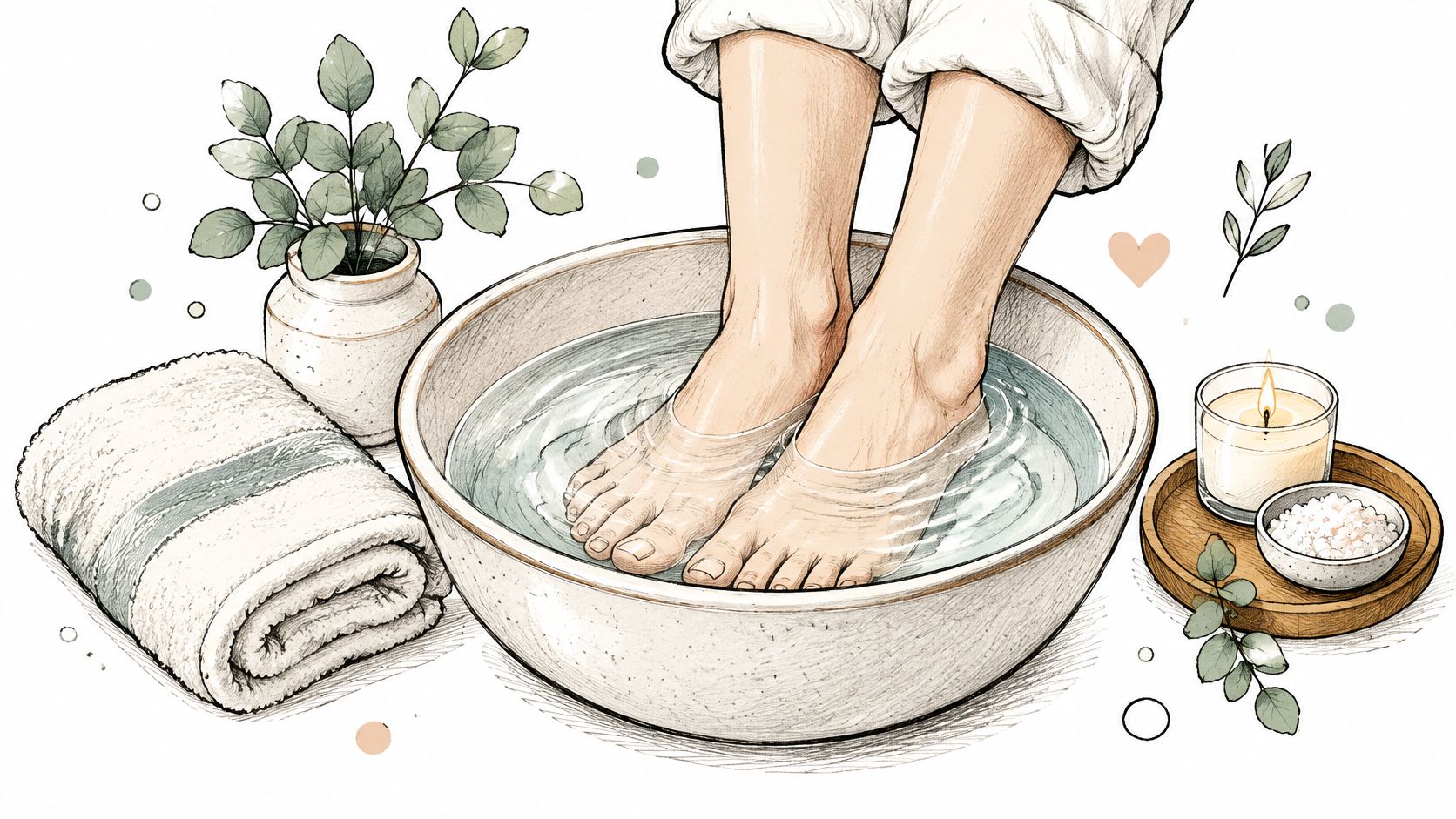
After a day on your feet, a short foot soak can mark the start of your evening. It temporarily softens rough calluses and makes the care that follows more pleasant. Allow a maximum of about ten minutes. Longer or hot soaking can put extra strain on dry skin.
How it fits into your evening
Have a clean bowl, a soft towel and your foot cream ready beforehand. Use pleasantly lukewarm water. Leave out any burning or open areas.
Afterwards, gently pat your feet dry. Pay attention to the spaces between your toes, too. Then apply cream to your heels and soles, leaving the spaces between the toes free.
The soak is a good choice when you have time for this routine. If you get home late from training, a quick wash in the shower is enough. Moisturising matters more than how long you soak.
If you’d like to use a cosmetic bath additive, you’ll find tips on preparing a magnesium foot bath. If you have sensitive skin or a medical condition, check with a doctor or pharmacist beforehand whether additives are suitable.
2. Urea cream
Strictly speaking, urea cream isn’t a kitchen-cupboard remedy. Even so, it is often the simplest choice for caring for dry feet at home. Urea binds moisture in the outer layer of the skin, without you having to mix anything or wash it off later.
The foot care information from diabinfo (in German) recommends creams or foams with 5–10% urea for dry skin on the feet. A lower concentration is better suited to daily care of slightly dry skin, a higher one within this range to noticeably rougher areas.
The quick fix before bed
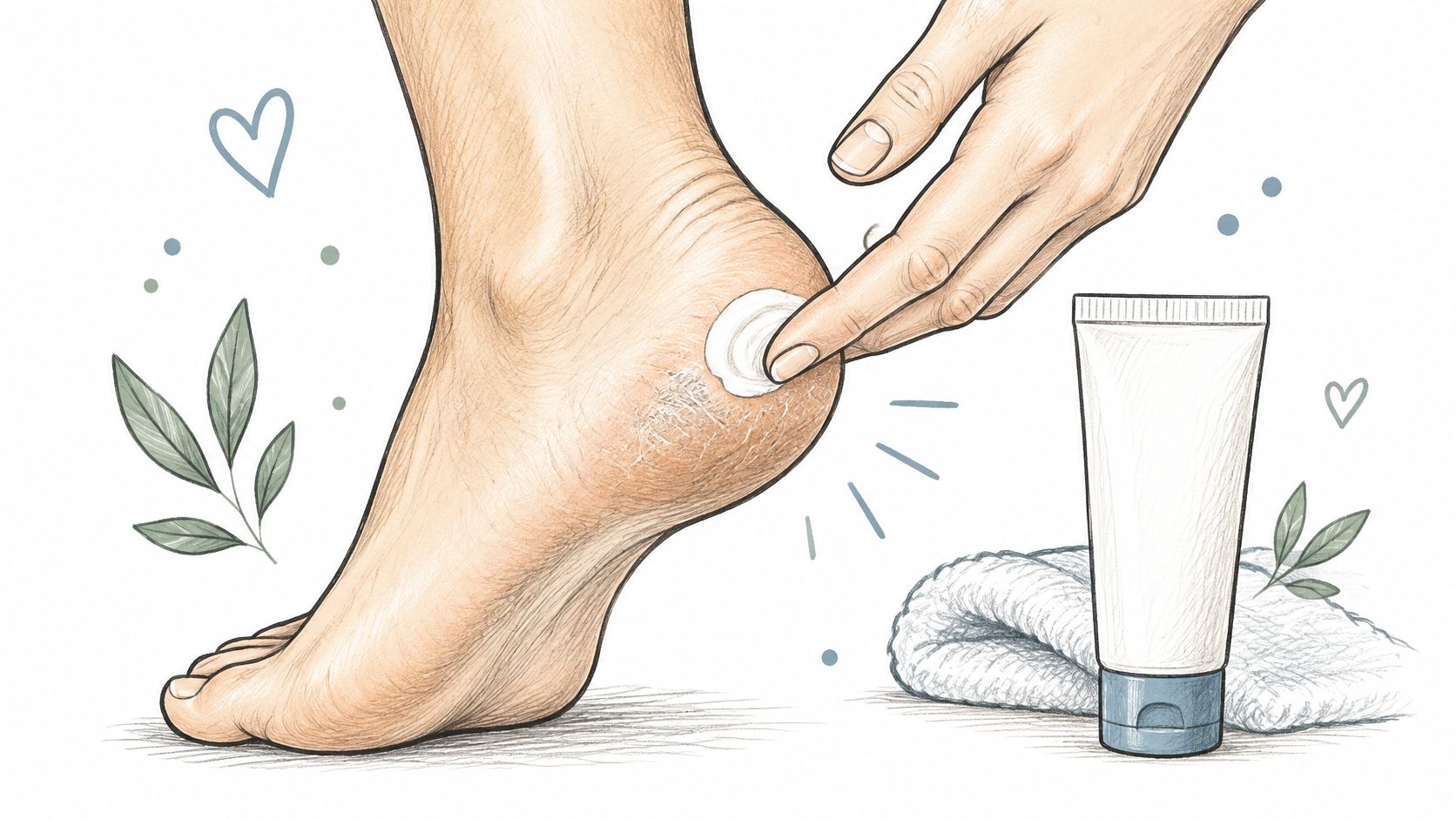
After showering, dry your feet thoroughly and spread the cream thinly over your heels and soles. Pay particular attention to the rough edge of the heel, massaging it in without rubbing hard. Cotton socks then keep the cream off your bedding.
You don’t need to remove calluses every time beforehand. If your skin is just dry, moisturising is enough. Constant filing turns a simple evening routine into unnecessary work and can irritate the skin.
Rule of thumb: choose your care according to the condition of your skin, not the highest number on the pack.
If you have open cracks, burning or inflamed skin, get advice on suitable care. Don’t spread higher-concentration products over your whole foot as a matter of course.
If you’re also looking for body care, a magnesium lotion and a urea foot cream differ in their composition. For dry heels, the moisture-binding and replenishing ingredients remain what counts.
3. Foot scrub with a pumice stone or foot file
Is there a hard ridge on the outer edge of your heel while the rest of the sole is just a little dry? Then careful smoothing may be the right step. Not every dry patch needs a scrub, though. Fine flakes are no reason to file hard.
Calluses form mainly where pressure and friction occur. They also have a protective function. So the aim is a smoother surface, not a completely callus-free sole.
Light pressure, hard spots only
- Choose your tool: use a pumice stone or a fine foot file rather than a sharp callus shaver.
- Work precisely: stroke gently over the thickened area. Stop before the skin becomes sensitive, warm or pink.
- Keep it clean: rinse the tool after use and let it dry completely.
- Finish off: remove loose bits of skin and moisturise your feet.
A pumice stone works well after a short foot soak. With a file, check whether it is designed for dry or damp skin. Don’t go over the same area again and again just because it doesn’t look perfectly smooth yet.
If you have diabetes, circulation problems or reduced feeling in your feet, get medical advice before callus care. The guide to dry feet from Brigitte (in German) stresses careful care and checking for injuries for people in at-risk groups. If you have cracks, blisters or pressure sores, further filing is not a good idea.
4. Plant oils and cotton socks overnight
Don’t want to rinse anything off in the evening? Then a thin layer of plant oil under cotton socks is easier than a mask. Plain almond oil or olive oil, for example, are suitable, provided your skin tolerates them.
Oil provides lipids, but not automatically complete moisturising care. It can form a protective film and make rough areas appear more supple. If your feet still feel tight despite the oil, a moisture-binding cream is the more sensible basis.

Apply thinly instead of wrapping up thickly
Massage a little oil into your clean, dry heels and soles. The skin should look slightly shiny, not dripping. Then put on loose cotton socks – not tight-fitting or airtight covers.
Test an unfamiliar oil on a small area of unbroken skin first. If you have a known almond allergy, skip almond oil, and if your skin is irritated, avoid essential oils or fragrance blends. The spaces between your toes stay free with this method, too.
More oil doesn’t automatically mean better care. A thick layer mainly increases the risk of slipping and ends up on fabrics more easily.
In everyday life, this method works well after your evening wash. After a sweaty run, on the other hand, your feet should be clean and properly dry first. If the skin between your toes is softened, oiling it is the wrong kind of care.
5. Honey foot mask
A honey mask suits a calm pampering evening better than a quick application between brushing your teeth and going to bed. It’s sticky, has to be rinsed off and needs a washable surface underneath. It isn’t more practical than a ready-made foot cream.
If you’d still like to try it, use a little honey with a small amount of olive oil. Only mix as much as you need straight away. Spread the mixture thinly on unbroken, dry heels and stay seated while it’s on.
How to keep the effort manageable
- Protect the surface: place your feet on a washable towel or in an empty bowl.
- Make it fresh: don’t keep leftover mixture for the next use.
- Rinse thoroughly: remove the sticky mixture completely with lukewarm water.
- Moisturise afterwards: dry your feet and apply your usual cream if needed.
The available sources don’t show any reliable added benefit of a honey mask compared with simple foot care. So treat it as an optional pampering ritual, not a necessary step towards softer heels. It doesn’t need a fixed application time.
A homemade honey mixture does not belong on cracks, open areas or inflamed skin. Kitchen honey is not a wound care product. If you have a known intolerance to honey or other ingredients, skip the mask as well.
On a packed training evening, the choice is simple: wash, dry, moisturise. The honey mask is only worth it if you enjoy the ritual itself and your skin tolerates it well.
6. Oatmeal foot soak
An oat bath is an option if you want to vary a plain foot soak a little. Finely ground oats turn the water milky. You shouldn’t expect any special effect on cracked feet from it, though.
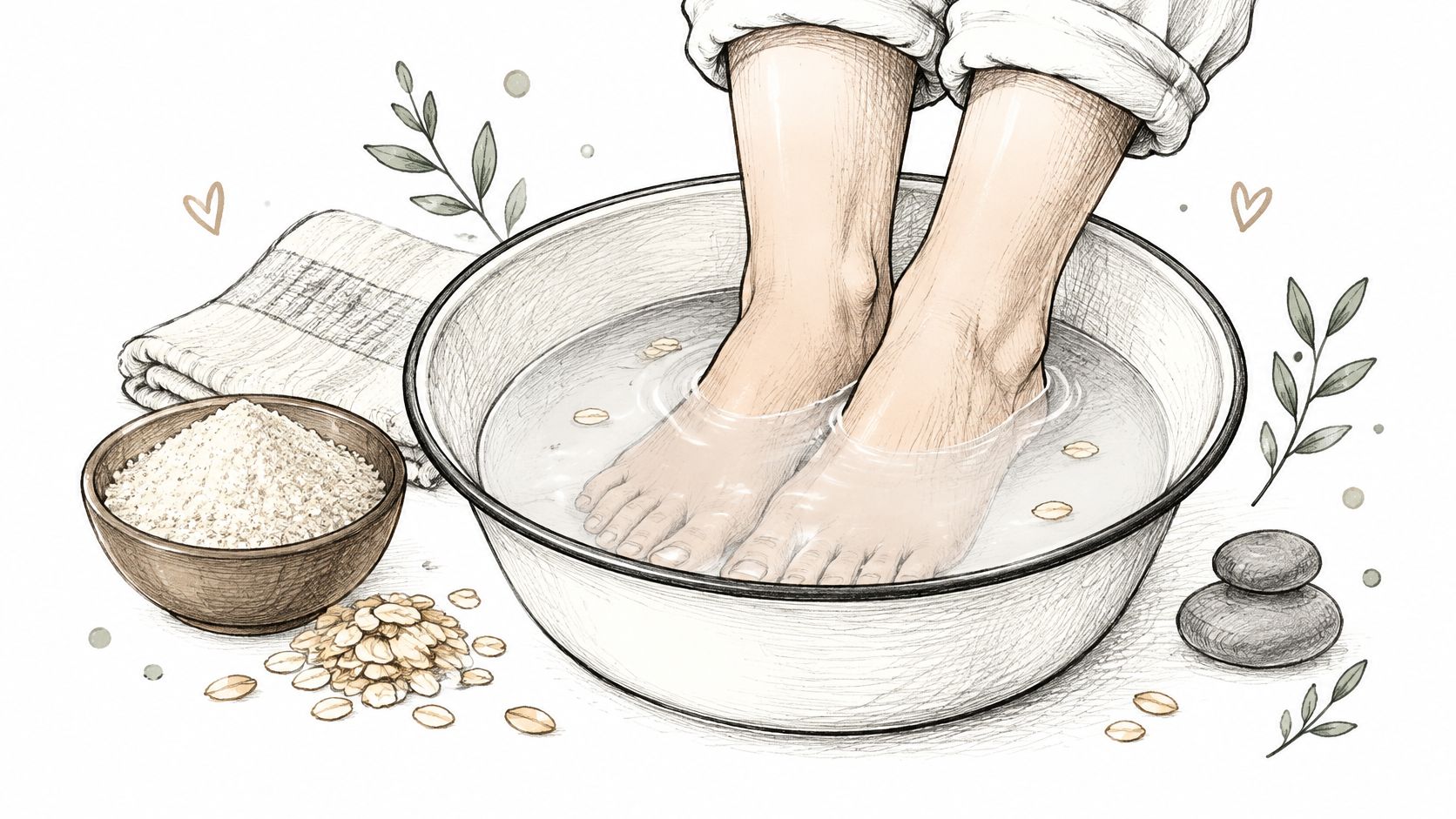
After cycling or a long working day, you can add some finely ground oats to lukewarm water. It stays even cleaner if you put the oats into a small fabric pouch. That way fewer bits float around in the bowl.
Pleasant, but with extra tidying up
Keep the soak short and the water lukewarm. Then rinse your feet gently so no oat residue stays between your toes. Afterwards, dry them carefully and moisturise any dry areas.
Don’t use coarse oats as a scrub. Vigorous rubbing is unnecessary for dry or sensitive skin. If you have a known oat allergy, leave out the additive.
A bath additive is optional. If the tidying up means you skip the care afterwards, plain water is the better choice.
The main drawback of this method is the effort. You need to prepare, clean the bowl and dispose of the leftovers. After sport, the shower you were going to take anyway, followed by foot care, is often enough.
If you have severe itching, reddened areas or weeping skin, don’t look for a solution by switching between bath additives. First find out why your skin has changed.
7. Magnesium oil as a foot bath and massage
Magnesium oil is a magnesium chloride solution and a cosmetic for external use. Despite its name, it isn’t a plant oil. It can be sprayed onto unbroken skin and massaged in, or used as a suitable bath additive.
For a magnesium oil massage after a run, clean your feet and calves and apply a small amount at first. Spread it with calm hand movements, without rubbing hard over sensitive areas. Afterwards you can care for dry heels with your usual cream.
Use it according to how your skin feels
- Magnesium spray or oil: “spray” often just describes the format of the same liquid magnesium for rubbing in. A magnesium body spray is easy to dose precisely.
- How often to use magnesium oil: start sparingly and base the frequency on how well you tolerate it and on the product instructions, not on getting the most intense skin sensation possible.
- Magnesium bath salts and flakes: for a magnesium salt bath, the amount depends on the specific composition. Tips on how to use a magnesium bath will help you prepare.
- Magnesium cream and gel: the whole formula determines how it feels on the skin. Our Magnesium Gel 150 ml doesn’t drip and is particularly pleasant to massage into heels and calves.
Don’t apply to freshly shaved or broken skin. Slight tingling can occur. If it burns, rinse the product off and in future use it more diluted, once your skin is free of irritation again. For children, during pregnancy or if you have a medical condition, ask a doctor or pharmacist first.
What is magnesium oil good for? As a foot bath or massage, it brings you evening relaxation for tired feet and heavy legs – and magnesium through the skin, without any tablets. Especially after sport or a long day on your feet, it becomes a regular evening ritual for many people. You can find out how many sprays you need and when best to apply them under how to use magnesium oil correctly.
The home remedies at a glance
| Home remedy | Effort | Application time | Particularly suitable for | Take care with |
|---|---|---|---|---|
| Lukewarm foot soak | Low | About 10 minutes at most | Soft skin and relaxing foot care | Not too hot; moisturise afterwards |
| Urea cream | Low | Regular use needed | Dry, rough heels and soles | Be careful with open areas or irritation |
| Foot scrub with a pumice stone or foot file | Low | Remove briefly and gently | Rough calluses on heels and balls of the feet | With diabetes or circulation problems, use professional foot care |
| Plant oils and cotton socks overnight | Low | Overnight | Dry skin and evening care | Test first if you have oil allergies; oil can leave stains |
| Honey foot mask | Low | No fixed application time needed | Supple skin and simple care at home | Do not use if allergic to honey |
| Oatmeal foot soak | Low | Keep it short | Sensitive skin and tired feet | Do not use if allergic to oats |
| Magnesium oil as a foot bath and massage | Low | As per product instructions | Tired feet and heavy legs | Do not use on broken or freshly shaved skin |
Soft feet without a complicated routine
For everyday life, you don’t need all the home remedies at once. After showering, thorough drying and a suitable cream are enough. A short foot soak fits in on quieter evenings, and careful callus care only where the skin is actually thickened.
Plant oil with cotton socks can be a rich addition. Honey and oats remain optional variations that take extra effort. Magnesium oil is a good fit for massaging feet and calves if you find it pleasant to use.
Stop experimenting if you notice these changes
- Cracks and open areas: especially if there is bleeding, weeping or skin that heals poorly, you need medical advice.
- Redness and swelling: have new or worsening changes examined promptly.
- Itching and flaking: there may be more behind it than dryness. The NDR guide to foot care (in German) stresses careful drying, especially between the toes.
- Persistent pain or numbness: stop filing and don’t try any new home remedies.
- Diabetes or circulation problems: tailor your foot care and callus treatment to your individual needs.
A pharmacy can help you choose a care product. Open wounds, pronounced changes and persistent symptoms should be seen by a doctor.
As an optional addition, Organic Magnesium offers pure Zechstein magnesium oil without fragrances, colourings or preservatives. It contains 31% magnesium chloride and 105 mg of magnesium per ml, comes from about 1,600 m below ground in the Netherlands and is dermatologically tested as well as registered as a cosmetic in the EU CPNP.
Our product range includes the Magnesium Oil Spray 100 ml, the Magnesium Spray 200 ml, the twin pack 2 × 100 ml, the 1-litre refill bottle (ideal for foot baths), the value pack 1 litre plus Spray 100 ml and the Magnesium Gel 150 ml. The gel doesn’t drip, is easier to massage in and is milder on sensitive skin. Shipping goes to all 27 EU countries and the UK in 2–5 working days, free within Germany from €49, with a 30-day money-back guarantee.
Organic Magnesium offers fragrance-free Zechstein magnesium oil for foot baths and for massaging in after sport or in the evening. If you’d like to add it to your simple foot care routine, you’ll find the right formats for you at Organic Magnesium.