
Magnesium Lotion: How to Use It, Dosage and Benefits

Magnesium lotion is magnesium you apply to your skin: usually a solution of magnesium chloride in water that you simply spray on and massage in. A practical alternative to tablets for sport, massage, tired legs and your evening routine.
What should you look for when choosing one? For your routine, what matters most is the product format, how well your skin tolerates it and using it correctly – not the highest possible magnesium figure.
Contents
- What magnesium lotion actually is
- The common product formats at a glance
- Magnesium through the skin: how it works
- What makes a product safe
- How often and how much to apply
- How to apply magnesium oil step by step
- Understanding tingling, burning and sensitive skin
- Sport, feet and children
- FAQ and quick summary
What magnesium lotion actually is
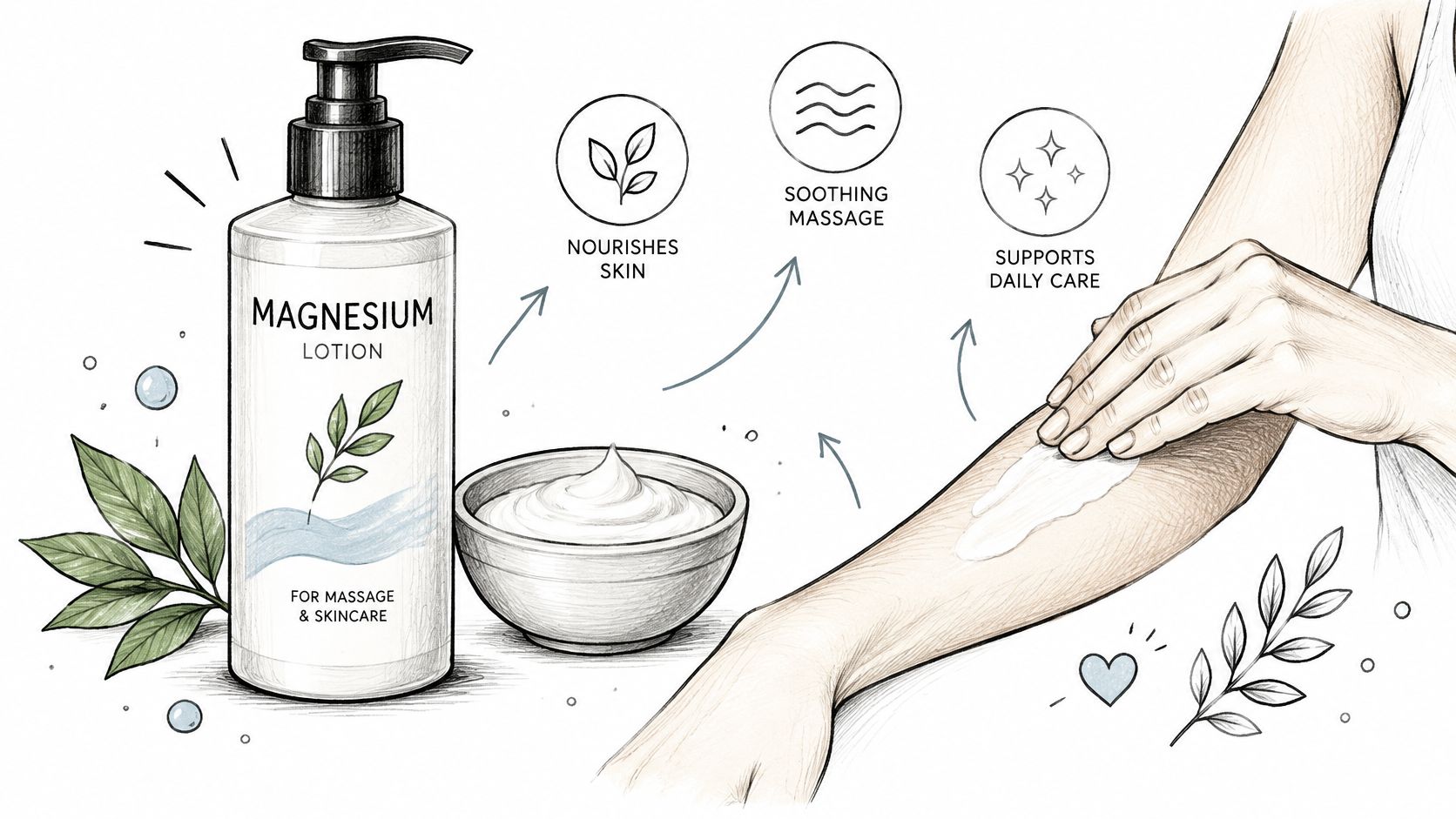
A range of different topical products are sold as magnesium lotion. What is often called magnesium oil is not chemically an oil at all, but an aqueous magnesium chloride solution. A true lotion or cream, on the other hand, also contains a skincare base. So the name alone doesn’t tell you what’s in the bottle.
With magnesium oil, the slightly oily feel comes from the concentrated salt solution, not from fat. Think of seawater drying on your skin and leaving a fine film of salt behind. Residues can form in a similar way here.
What the concentration figure means
The packaging may state the proportion of magnesium chloride or the amount of elemental magnesium per millilitre. These are two different figures. Both describe what’s in the bottle, not the amount your body absorbs.
The key distinction is therefore this: food and supplements you swallow go into your digestive tract. Liquid magnesium for rubbing in goes straight onto your skin: no swallowing tablets, no capsules, and you apply it exactly where you feel you need it.
A few sprays after your shower: there’s hardly an easier way to build magnesium into your routine.
The common product formats at a glance
Product formats and their typical use
| Format | Typical use | Consistency | Note |
|---|---|---|---|
| Spray (magnesium oil) | Spray directly onto calves, shoulders or neck and massage in | Thin, feels slightly oily | For the skin, not for drinking |
| Gel | Targeted massage of specific areas | Thick, gel-like | Use as directed by the manufacturer |
| Foot bath solution | Foot care after standing for long periods | Dissolved in water | Follow the mixing ratio on the pack |
| Bath salts or flakes | Added to a full bath | Solid, dissolves in water | Dose as stated on the pack |
| Magnesium cream | Skincare and massage cream | Creamy | Check the ingredients on the pack |
Magnesium spray or oil? Usually both terms refer to the same kind of aqueous magnesium chloride solution. The spray head makes targeted application easier, while a refill bottle is designed for topping up. A gel also contains a gelling agent and tends to stay in one place as you spread it.
Magnesium bath salts and magnesium flakes, by contrast, are dissolved in bath water. When using magnesium flakes, the intended amount of water is what counts: a foot tub needs a different amount of product than a bathtub. So for your magnesium salt bath, follow the specific instructions on the pack rather than a one-size-fits-all mixing ratio.
Topical care is not a drinking solution
You should not drink magnesium oil or cosmetic bath additives. A figure in milligrams doesn’t turn them into a food supplement either.
The DGE (German Nutrition Society) cites the EFSA upper limit of 250 mg of magnesium per day for readily soluble magnesium salts taken orally from food supplements, water or fortified foods; normal magnesium from food is not included in this. This value is not a dosing rule for cosmetics.
A simpler question helps you choose: are you looking for something to massage in, for your feet or for the bath? The right consistency tells you more than a particularly high magnesium content.
Magnesium through the skin: how it works
The idea is simple: you apply magnesium directly to your skin and massage it in where you need it – on your calves, shoulders, neck or feet. Unlike tablets, it doesn’t have to pass through your stomach and gut first.
Why many people prefer to spray on their magnesium
Many people use magnesium oil as an alternative to tablets: no swallowing, no capsules, and applying it becomes a little massage ritual after sport or before bed.
Tip: Magnesium oil spreads best on slightly damp skin after a shower and absorbs pleasantly.
You can find out more about the effects of magnesium cream and the effects of magnesium gel in our guide to the effects of magnesium spray. For targeted massage of specific areas, our Magnesium Gel 150 ml is ideal.
If you suspect a magnesium deficiency, also have it checked by your doctor.
What makes a product safe
A clear label helps more than a big promise about results. You should be able to see which ingredients it contains, how the product is used and which warnings apply. A concentration figure alone says nothing about the safety of the finished cosmetic product.
In general, cosmetics do not require official approval. Manufacturers must nevertheless ensure they are safe for health; in Germany, the responsible state authorities carry out spot checks. Solid documentation includes a safety assessment, raw material specification, batch testing, microbiological quality and correct labelling.
What is worth checking
- Full ingredients list: Check fragrances and other additives too.
- Clear instructions for use: The amount to apply, suitable areas of skin and how to deal with residues should be easy to understand.
- Transparent manufacturer details: The responsible supplier and product labelling must be clearly identifiable.
- Dermatologically tested: A plus for skin compatibility, especially if you use the product every day.
Organic Magnesium’s magnesium oil and gel are dermatologically tested and registered as cosmetics in the EU CPNP.
If you want to avoid fragrances deliberately, you’ll find tips on choosing in magnesium without additives. Even with a short ingredients list, a careful first patch test still makes sense.
How often and how much to apply
Amount and frequency by situation
| Use | Amount | Frequency | Note |
|---|---|---|---|
| Spray after training | As per the instructions, start with a few sprays | As needed, on training days | Leave on, then wash off if necessary |
| Spray in the evening | As per the instructions, start with a few sprays | In the evening, if your skin tolerates it well | On slightly damp skin after a shower |
| Foot bath | Dissolved in warm water as stated on the pack | As needed, e.g. after standing for long periods | Dry your feet afterwards |
| Gel for targeted massage | As directed on the pack | As needed | Watch how your skin reacts |
There is no medical dosage for cosmetic magnesium lotion. Nor can nutritional values be converted into sprays: the DGE reference values for adults are 350 mg a day for men and 300 mg for women, based on total magnesium intake.
A routine without counting amounts
A runner might first try a small amount of product on a small patch of her calf after a shower. The next time she uses it, the condition of her skin decides whether the routine suits her – not whether she has reached a supposed daily dose.
To the question how often should you use magnesium oil? the practical answer is: as needed and as long as your skin tolerates it well. Many people spray it on every day, for example in the evening after a shower, and make it a fixed part of their routine.
How to apply magnesium oil step by step
Careful use of magnesium spray starts with clean, intact skin. The overview shows the basic order.
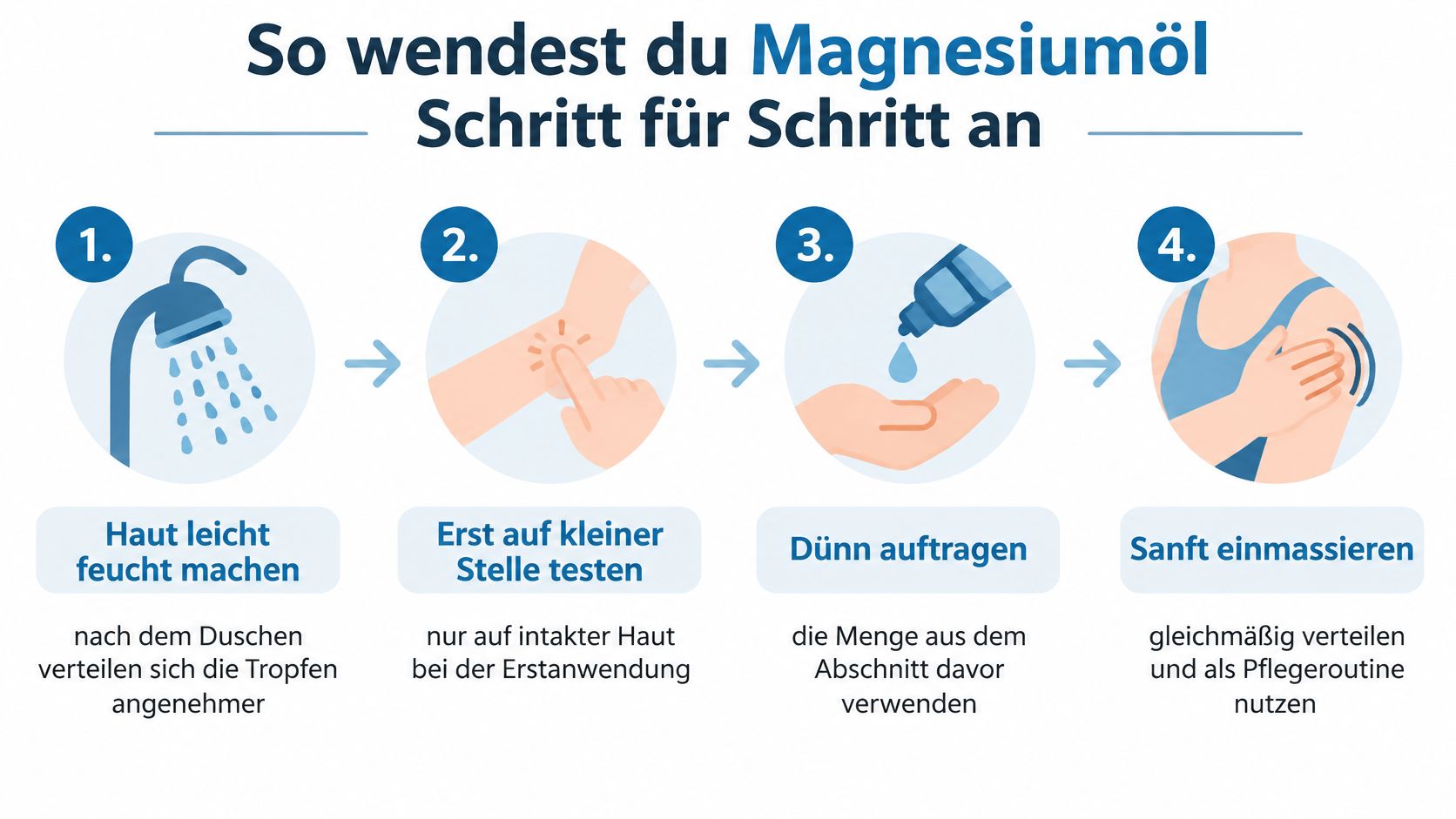
- Dampen your skin slightly. After a shower, you can leave a little moisture on your skin. This makes the solution easier to spread.
- Test a small area first. For the first application, choose intact skin. Avoid freshly shaved, irritated or broken skin.
- Apply thinly. Start with a few sprays as directed in the product instructions, for example on your calves, arms or shoulders. Don’t spray towards your face, eyes or mucous membranes.
- Massage in gently. Spread the liquid evenly with your hand. There’s no need to rub hard, especially if your skin is sensitive.
- Wash off residues if needed. Follow the instructions for use on how long to leave it on. Water removes any remaining salt film.
- Prepare a foot bath separately. Add the recommended amount to warm water and mix thoroughly. Dry your feet carefully afterwards, including between your toes.
Why the first patch test still matters
Germany’s Federal Institute for Risk Assessment (BfR) stresses manufacturers’ responsibility for safe cosmetic products. Even so, individual skin reactions are possible, even with dermatologically tested products.
A small first application limits the area affected if the product doesn’t agree with you. For sensitive skin, diluting is only an option if it is in line with the product instructions. Don’t try to endure strong burning as if it were a necessary part of the process.
Understanding tingling, burning and sensitive skin
Skin reactions, causes and what to do
| Symptom | Possible cause | What you can do |
|---|---|---|
| Slight tingling or warmth | Skin reaction to the concentrated salt solution, especially possible at first | Use less, spread gently and observe |
| Strong burning | Concentrated solution on irritated or freshly shaved skin | Wash off with water immediately and stop using |
| Redness or itching | Individual skin reaction | Wash off, take a break and see a doctor if symptoms persist |
| Feeling of tightness | Salt residues, especially on dry skin | Wash off residues; in future, dilute as per the instructions if necessary |
| Contact with eyes or mucous membranes | Accidental contact | Rinse thoroughly with water and seek medical advice if you have symptoms |
Slight tingling is normal at first and usually fades with regular use. But you don’t have to put up with it. If it becomes unpleasant, wash the area off.
Additives can play a role too
The BfR on essential oils points out possible irritation from such ingredients. This advice relates to essential oils, not automatically to magnesium chloride, but it is relevant for perfumed or scented skincare products.
Skin that is already irritated may react more sensitively, much like with sunburn. So wait until your skin has calmed down before applying.
Stop rule: Strong burning means wash off and stop – don’t keep massaging it in.
If you have a persistent rash, a skin condition or are unsure, ask your doctor before applying again.
Sport, feet and children
After running, cycling or strength training, a magnesium oil massage can be part of your routine. Many athletes massage magnesium oil into their calves, thighs and shoulders after training for relaxed muscles and a pleasant feeling after exertion.
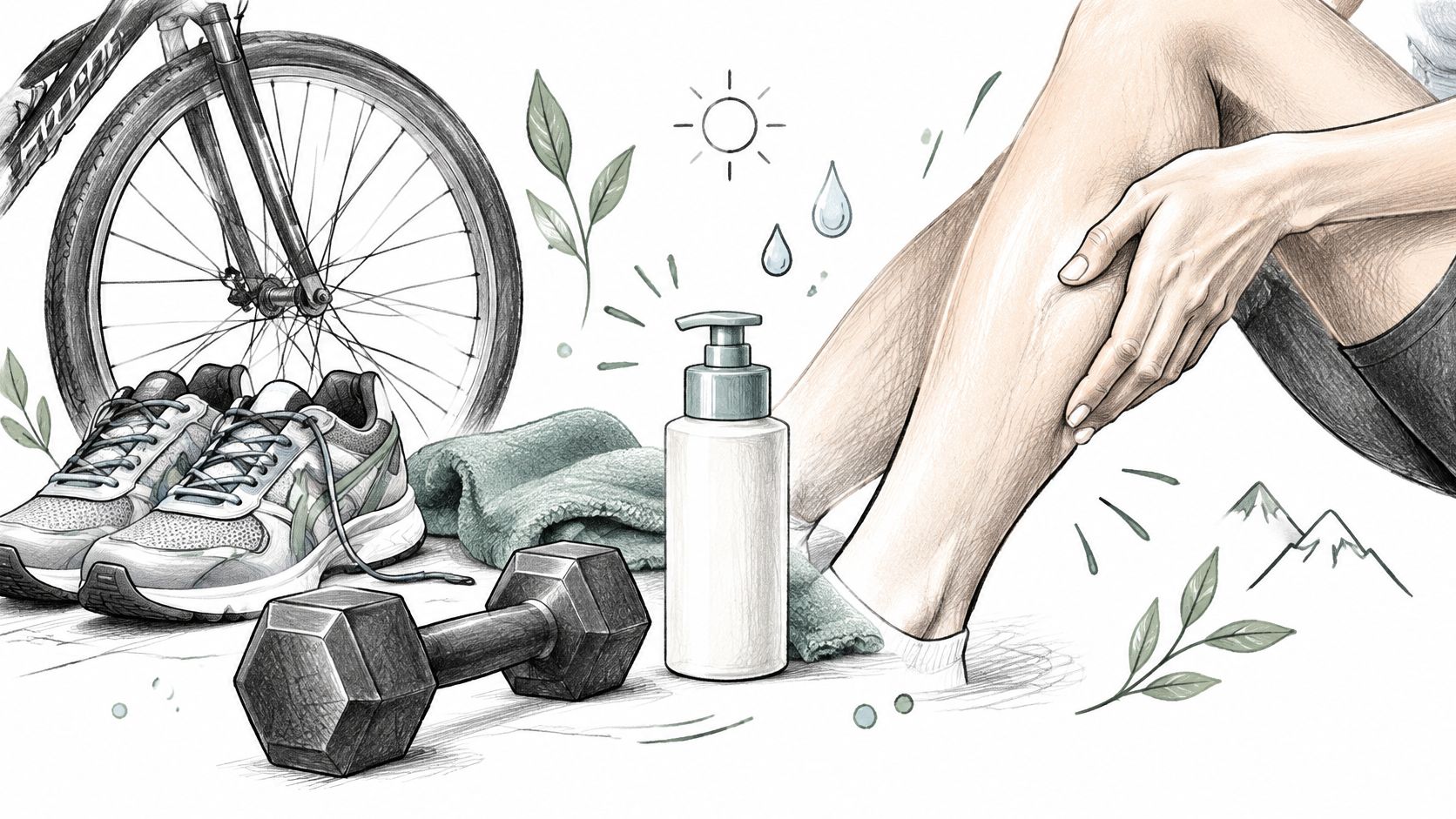
The handy Magnesium Oil Spray 100 ml fits in any gym bag. If you get frequent, recurring cramps, also have the cause checked by a doctor.
Foot care after standing for long periods
If you’d like to use magnesium oil for your feet, you can choose between massaging it in and a suitably prepared foot bath. After a working day on your feet, for example, a relaxing foot care routine is a good idea.
You’ll find practical tips on preparation in our guide to the magnesium foot bath. Pay particular attention to open sores, cracked skin and the temperature of the water.
Children have their own rules
An adult routine is not automatically a recommendation for children. The BfR on the use of essential oils advises particular caution with babies and young children; this advice cannot simply be applied to magnesium chloride across the board.
When it comes to magnesium spray for children, clear rules therefore apply:
- Check the age recommendation: Only consider use that is expressly suitable.
- Without clear manufacturer guidance, don’t use it: Especially with young children, don’t experiment with your own dosage.
- Stop if irritation occurs: Don’t reapply to get the skin used to it.
Questions about using it on your child are best answered by your paediatrician.
FAQ and quick summary
What is magnesium oil good for?
For massaging in after sport, for heavy legs and tired feet, as a foot bath and as a relaxing evening ritual: magnesium through the skin, without any tablets.
Does it help with cramps or sleep?
Many people use magnesium oil in the evening as part of their bedtime routine and massage it directly into the calf when they get calf cramps. If you have frequent cramps or ongoing sleep problems, also have the cause checked by a doctor.
What about magnesium deodorant and magnesium body spray?
Check the intended use. A body spray is not automatically a deodorant, and magnesium as an ingredient does not mean proven protection against sweat or odour. If you want to use a product as a deodorant, look specifically for that use.
What belongs on your personal checklist?
- Decide on the purpose: Massage, foot bath or other body care.
- Read the label: Check the ingredients, concentration and use.
- Start small: Test a limited area of skin first.
- Take skin reactions seriously: If irritation occurs, take a break or stop.
Magnesium lotion and magnesium oil are the easy way to bring magnesium into your everyday life: spray on, massage in, done. After sport, for your feet or as an evening ritual.
Organic Magnesium offers pure Zechstein magnesium oil from around 1,600 m below the Netherlands with 31% magnesium chloride and 105 mg of magnesium per ml, free from fragrances, colourings and preservatives. Available as sprays in 100 ml, 200 ml and 2 × 100 ml, a 1-litre refill bottle, the 1 litre plus 100 ml spray bundle and Magnesium Gel 150 ml. All products are dermatologically tested and registered as cosmetics in the EU CPNP.
For massage after sport, Organic Magnesium offers a handy spray for your gym bag, the 1-litre refill bottle for home and a gel for targeted application. Discover magnesium oil from Organic Magnesium now. We deliver in 2–5 working days, with free shipping within Germany from €49 (Shipping), and a 30-day money-back guarantee applies.