
Magnesium Spray for Kids: What Parents Should Know

You can use magnesium spray for kids externally, on healthy skin – never drink it, and if in doubt, check with a doctor. What matters is not just age, but also whether the skin is healthy and whether the product suits your child.
If magnesium is part of nutrition, can the daily requirement simply be converted into sprays? This is exactly where confusion easily arises. For a relaxed start, it helps to look at two separate things: age-appropriate magnesium intake through diet, and carefully adjusted application on the skin.
Contents
- Can your child use magnesium spray?
- Magnesium requirements from toddlers to teenagers
- When to get medical advice before spraying
- How to apply magnesium spray on children
- Recognising skin reactions and responding correctly
- A relaxing evening routine with a foot bath and leg massage
- FAQs and getting started
Can your child use magnesium spray?
Yes, on one clear condition: magnesium spray is a skincare product. For children, the answer depends less on age than on three guidelines that you check before the first spray.
The nice thing about a spray: you apply it precisely where a gentle massage is wanted. Nothing is swallowed, and the stomach isn’t burdened. The spray does not replace magnesium prescribed by a doctor; in that case, the doctor’s recommendation remains decisive.
Three guidelines for getting started
- Skin only: never drink magnesium oil, take it orally or mix it into a drink. Keep the bottle out of reach of young children.
- Choose healthy skin: leave out injured, scratched and freshly shaved areas. Eyes and mucous membranes must not come into contact with the spray.
- Get professional advice first: discuss using it on your child with your paediatrician or pharmacy beforehand, especially if there are pre-existing conditions, skin problems or regular medication.
Your child’s wishes count too. A massage only works if your child feels comfortable. Let them have a say in whether being touched on the calves or feet is welcome right now.
For everyday family life: a calm start on a small patch of skin makes more sense than applying it to a large area straight away.
Slight tingling can occur and is not automatically a warning sign. If the area burns, however, one short rule applies: stop and rinse off. Everything else about how the skin reacts follows in the next sections.
This way, magnesium oil can be gently built into your child’s body care, while their actual magnesium supply continues to come from their diet.
Magnesium requirements from toddlers to teenagers
The estimated values for an adequate magnesium intake rise considerably during childhood. The following daily amounts are given by the German Nutrition Society (DGE) in its magnesium reference values.
Estimated magnesium values by age and sex
| Age group | Sex | Estimated value per day (DGE) |
|---|---|---|
| Infants 0 to under 4 months | all | 24 mg |
| Infants 4 to under 12 months | all | 80 mg |
| 1 to under 4 years | all | 170 mg |
| 4 to under 7 years | all | 190 mg |
| 7 to under 10 years | all | 240 mg |
| 10 to under 13 years | Boys | 270 mg |
| 10 to under 13 years | Girls | 230 mg |
| 13 to under 15 years | Boys | 280 mg |
| 13 to under 15 years | Girls | 240 mg |
| 15 to under 19 years | Boys | 330 mg |
| 15 to under 19 years | Girls | 260 mg |
| Adults for comparison | Men | 350 mg |
| Adults for comparison | Women | 300 mg |
These values refer to diet, not to the dosage of a spray. Nor are they a prompt to give the respective amount additionally as a supplement. For parents, they mainly serve to put the supply into an age-appropriate context.
An example: when your child moves into the next age group, it doesn’t automatically mean you need a new product. Look at everyday meals first. You’ll find concrete ideas in our overview of magnesium-rich foods.
Exercise is not a dosage calculator
Sport, heavy sweating and stressful phases can be a reason to take a closer look at the supply. But this neither implies a higher requirement for every child across the board nor an additional amount of spray.
If you’re unsure, take a typical meal plan and information about your child’s daily life to the paediatrician. That way you can discuss whether the diet is a good fit or whether a targeted check makes sense. The figures provide orientation; the individual decision is made by the treating professional.
When to get medical advice before spraying
A mosquito bite, a scratched spot, eczema: children’s skin has sensitive days. With atopic dermatitis, other skin conditions, pre-existing conditions, regular medication or previous unexplained reactions to skincare products, the first application should therefore be discussed with your paediatrician or pharmacy beforehand. With babies and toddlers, this consultation is especially important, and it is the most reliable start for every child.
Two children of the same age can have very different starting points. Suitability depends on skin condition, medication and medical history, not just on age. The DGE’s questions and answers on magnesium also help you keep nutritional supply and skincare products apart.
Questions that make the conversation concrete
- Suitability: does magnesium oil suit your child’s skin and health situation?
- Starting area and dilution: where can you begin, and how should the product be prepared for it?
- Reactions: which changes should make you pause, and when is an examination needed?
Bring the product packaging or a clearly legible photo of the ingredients. Also note down the names of your child’s other creams or medical skin products and describe your planned routine: which area, how often, at what time of day. That way the professional can take your child’s entire skincare into account.
An example: your daughter tolerates the spray well, and you’d like to use it on your son too. In that case, ask briefly, because his skin and his medical history are assessed separately.
If recurring pain, cramps or pronounced tiredness are the reason you want the product, raise these complaints directly. A massage may feel pleasant, but the cause of such complaints needs to be investigated regardless.
Start small after consulting
To get started, Organic Magnesium offers the Magnesium Oil Spray 100 ml for €15.99, a compact size for on the go and for trying it out. The odourless formula without fragrances, colourings or preservatives can be sprayed precisely onto the desired area, for example for a gentle massage.
If the application suits your child, you can take your time finding out whether they like this kind of care.
How to apply magnesium spray on children
Get everything ready before you start: the product, water and a soft towel. Choose a time when your child is relaxed and can tell or show you how the application feels.
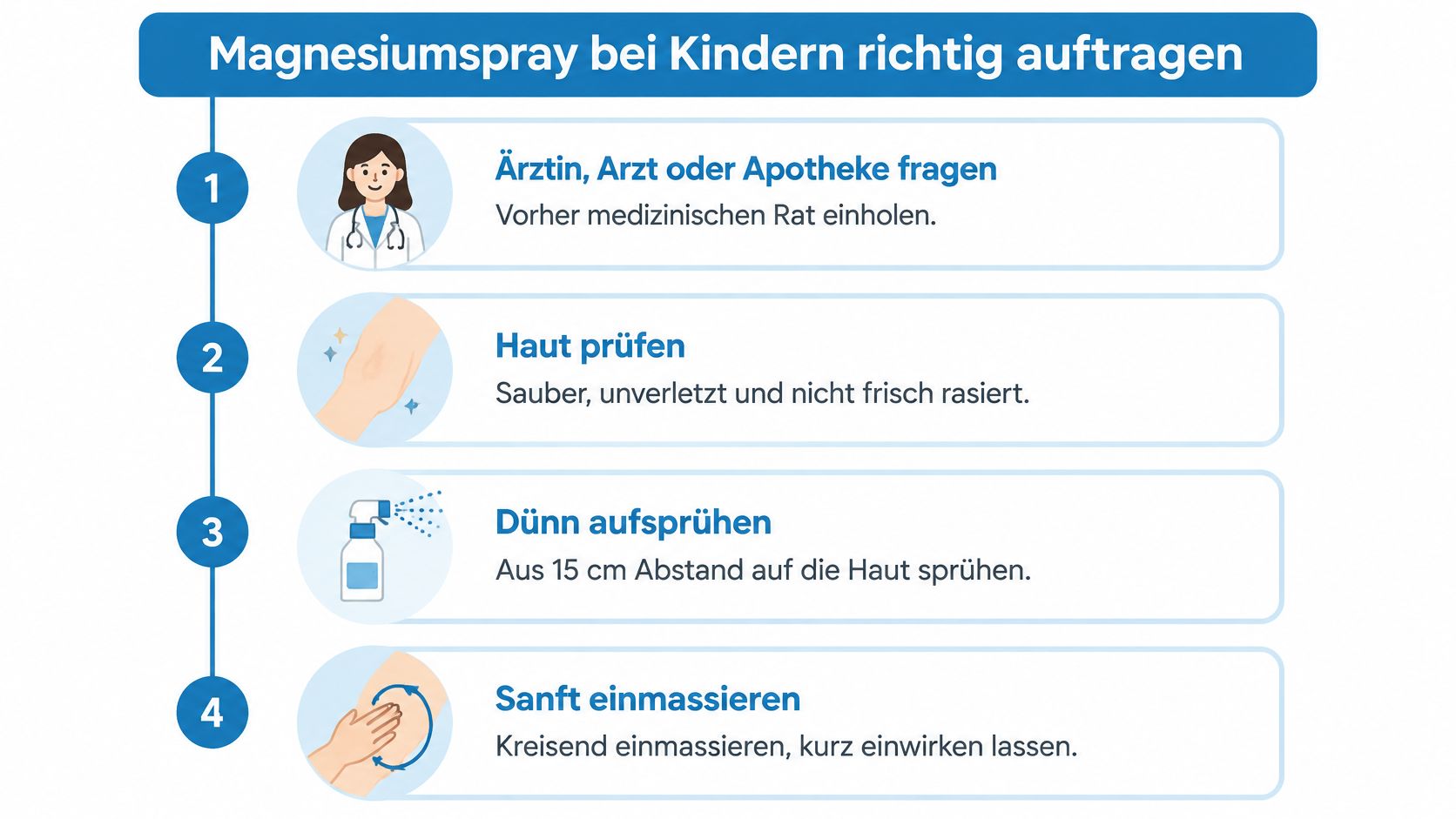
The gentle application routine
Consult beforehand. Have suitability, dilution and amount clarified for your child. That way the application starts with an individual recommendation rather than an adopted adult routine.
Look at the skin carefully. The chosen area must be clean, unbroken and not freshly shaved. After a shower, check especially whether there are any scratched or irritated areas.
Start diluted on a small area. Use the small amount you agreed on, for example on the calf. A small test area makes it easier to observe how the skin reacts.
Massage in gently. Spread the product with light, circular movements until the skin no longer looks wet. Vigorous rubbing is unnecessary and can further irritate sensitive skin.
Stop immediately if it burns. Rinse the product off with water. A later, more diluted application is only an option once the skin has calmed down and after consulting accordingly.
Wash your hands and put the bottle away. That way the product doesn’t accidentally get into sensitive areas when someone rubs their eyes. Don’t let young children use the spray bottle themselves.
Why milligrams don’t translate into sprays
The milligram values in the table are nutritional values. They cannot be converted into sprays – which is why you determine the right amount for your child together with your paediatrician or pharmacy.
Nor should you simply transfer Organic Magnesium’s general usage recommendation of 5 to 10 sprays, often once a day, to your child. What remains decisive is the individual agreement and the product information.
For adults, the page on using magnesium oil describes the usual routine in more detail. For children, the start remains deliberately smaller and more cautious.
Recognising skin reactions and responding correctly
Slight tingling can be normal. But you can’t tell whether your child finds the application pleasant just from how the skin looks. Ask, and with younger children also watch for pulling away, restlessness or wanting to wipe the area.
Skin reactions, causes and the right response
| Sign | Possible cause | What you do |
|---|---|---|
| Slight tingling | Reaction on application | Only if it stays pleasant, keep massaging gently and observe; it can wear off quickly |
| Burning | Sensitive or irritated skin | Rinse off with water immediately; later, only apply more diluted after consulting |
| Freshly shaved or injured skin | Increased sensitivity | Don’t spray; wait until the skin has healed and is free of irritation |
| Contact with eyes or mucous membranes | Product on sensitive areas | Rinse thoroughly with clear water and get medical advice if irritation persists |
| Persistent redness, itching or rash | Possible intolerance or skin irritation | Stop using it and ask a doctor or pharmacy |
| Swallowing or drinking | Accidental ingestion of an external product | Get medical advice or call the poison control centre immediately and have the packaging ready |
The possible causes in the table are not a diagnosis. Persistent redness in particular cannot be reliably judged by whether the child has tolerated the spray before. In case of breathing problems, marked swelling or a severe general reaction, you need medical help immediately.
What the cosmetic safety assessment means
According to the European Commission’s information on cosmetic products and the CPNP, cosmetics must undergo an expert safety assessment and be registered in the European notification portal before they are sold. This framework does not replace an individual check of whether a product suits your child’s skin.
Organic Magnesium’s magnesium oil is dermatologically tested and registered in the EU cosmetics portal CPNP. Even so, every skin is different: your child’s wellbeing always comes first. If something doesn’t feel right, take a break.
You’ll find more context under magnesium oil and side effects on the skin. With sensitive skin or known skin problems, it’s best to explicitly clarify getting started with the treating practice.
A relaxing evening routine with a foot bath and leg massage
After an active afternoon, the shoes are off, dinner is over and the bathroom gets quieter. Your child fancies a short foot massage. If the application has been professionally cleared, this can become a pleasant transition from running around to resting.

A massage without hurry
After a shower or bath, gently pat the skin dry. Spread the individually agreed, diluted amount on intact, still slightly damp skin. Start with soft movements on the calves or feet, without putting pressure on sore spots.
- After exercise: a light massage can feel like a soothing bit of attention after sport and play.
- For tired feet: let your child rest their legs comfortably and tell you which touch feels good.
- For older children: neck and shoulders are only an option if your child wants it and use there has been agreed.
The odourless formula suits an understated evening skincare routine well. Some like the smooth, velvety feel of the skin after spreading it, others prefer to wash the product off again later. Both can be part of a relaxed routine.
The best evening ritual is one in which your child feels comfortable and can stop at any time.
If your child prefers warm water
A magnesium foot bath can be an alternative way to spend the evening. Clarify the right preparation and use for your child beforehand, instead of adopting an adult amount.
For more extensive bath-time care, you’ll find ideas on the magnesium bath. Choose one simple, pleasant option rather than several applications at once. A calm start to the night doesn’t need a fixed sequence that your child has to follow.
FAQs and getting started
Can you drink magnesium oil?
No. Magnesium oil is intended exclusively for external use. It doesn’t belong in drinks or food and does not replace a supplement taken by mouth.
From what age can your child use it?
There is no general age limit. The DGE’s age-related reference values help you put requirements into context; for application on the skin, individual clarification remains the safe framework. Check the age information on your product and, for children – especially babies – get advice from a paediatrician or pharmacy beforehand. Do not apply anything to injured, freshly shaved or irritated skin.
Can magnesium oil complement the evening routine?
Once the application has been cleared, a gentle massage on the calves or feet can be a calm way to end the day. The pleasant part is the attention: warm hands, slow movements, time together. You can read what magnesium spray does for muscles, skin and relaxation in our guide to magnesium spray effects.
What’s in the product?
Organic Magnesium’s magnesium oil contains only water and 31% Zechstein magnesium chloride (105 mg of magnesium per ml) – odourless, without fragrances, colourings or preservatives. Start with a little, watch the skin and rinse off with water if it burns.
Which sizes are there to get started?
The 100 ml spray is ideal for trying it out and for on the go. The 200 ml spray or the 1-litre refill bottle are worth it once your routine is established and tolerance is clear.
Once you have the go-ahead, start with a small size and a short moment in the evening. You’ll find suitable sprays and refill sizes in the Organic Magnesium shop – with delivery in 2–5 working days and a 30-day money-back guarantee.